
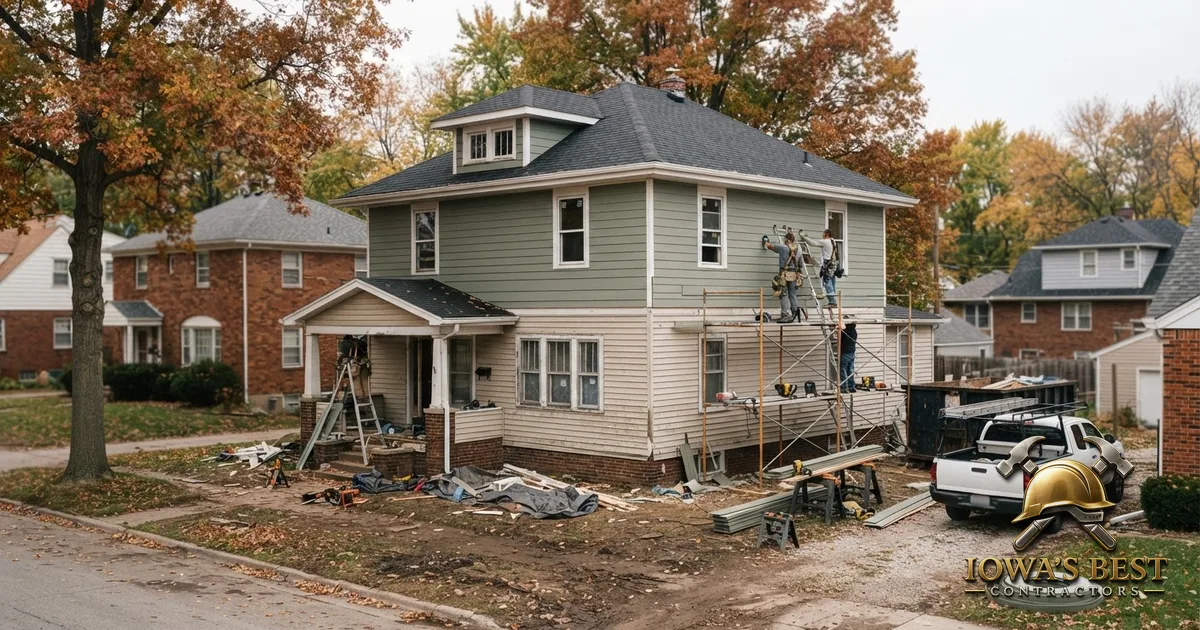
Replacing the siding on a typical Iowa home costs roughly $9,000 to $25,000 for vinyl and $18,000 to $45,000 or more for fiber cement, with most projects landing between $12,000 and $30,000. The main drivers are the material you choose, the size and shape of your home, and how much repair the walls need underneath. Homeowners often plan by the square foot: about $4 to $9 installed for vinyl and $8 to $16 for fiber cement.
Siding cost by material
Material is the biggest decision, affecting both upfront cost and how the siding holds up to Iowa weather.
- Vinyl ($4-$9 per sq ft): The most popular and affordable choice. Low maintenance and decent durability, though it can crack in extreme cold and fade over time.
- Fiber cement ($8-$16 per sq ft): Brands like the widely used cement-board products resist hail, moisture, and fire, and handle Iowa's freeze-thaw well. Higher cost but excellent longevity.
- Engineered wood ($6-$12 per sq ft): A lighter, lower-cost alternative to fiber cement with a real-wood look, needing proper sealing.
- Steel and aluminum ($8-$14 per sq ft): Very durable and hail-resistant, though metal can dent.
For a typical single-story or two-story Iowa home of roughly 1,500 to 2,000 square feet of wall area, those per-foot figures produce the whole-house ranges above. Costs vary by contractor, home height, and site conditions.
What factors affect siding replacement cost?
Beyond material, several factors move the total.
Home size and stories. More wall area and more height mean more material, labor, and staging. Two-story homes cost more per project than ranch-style homes.
Wall repairs. Once old siding comes off, contractors sometimes find rotted sheathing, water damage, or failed house wrap, common in older homes across Dubuque, Davenport, and Waterloo. Repairs add cost but are essential.
Insulation and house wrap. Adding insulated backing or new weather-resistant barrier improves energy efficiency, valuable given Iowa's hard winters and humid summers, and adds to the budget.
Trim, corners, and details. Complex rooflines, many windows, gables, and decorative trim all increase labor.
Removal and disposal. Tearing off and hauling away old siding is a line item, higher if there are multiple layers.
Iowa climate considerations
Iowa's weather is demanding on exterior walls. Freeze-thaw cycles stress materials and fasteners, humid summers invite moisture problems behind poorly installed siding, and hail and high winds can damage weaker products. This is why many Iowa homeowners choose fiber cement or steel for exposed elevations, and why proper installation, with correct flashing, house wrap, and ventilation, matters as much as the material itself.
Good siding also improves comfort and energy bills. Combined with air sealing and insulation, a quality residing job helps your home hold heat in winter and stay cooler in summer.
Tip: Pay attention to what goes behind the siding. House wrap, flashing around windows and doors, and proper fastening protect your walls from Iowa's wind-driven rain far more than the surface material alone.
How do I choose a siding contractor in Iowa?
Look for a contractor who residing homes regularly, provides a written scope that spells out tear-off, wall repair allowances, house wrap, and flashing, and carries proper insurance. Get at least three bids so you can compare both price and thoroughness.
You can browse registered siding contractors statewide or find siding pros in Sioux City and other cities. Every contractor in our directory appears on Iowa's state registration record under chapter 91C, with no paid placement. Registration is not a license or an endorsement, so review past work and references too.
Frequently asked questions
How long does siding replacement take?
A typical home takes about one to two weeks, depending on size, material, and how much wall repair is needed. Weather delays are common in Iowa, so build in some flexibility.
Which siding is best for Iowa weather?
Fiber cement and steel stand up especially well to hail, freeze-thaw, and moisture. Vinyl remains a solid, budget-friendly choice for many homes when installed correctly.
Will new siding lower my energy bills?
It can, particularly if you add insulated backing and improve air sealing at the same time. The gain is modest on its own but meaningful combined with attic and window improvements.
Does insurance cover siding damage?
Storm damage from hail or wind is often covered by homeowner's insurance, subject to your deductible and policy terms. Document damage with photos and contact your insurer promptly.
Planning a residing project? Collect bids from registered contractors and compare registered Iowa siding installers at no cost.