
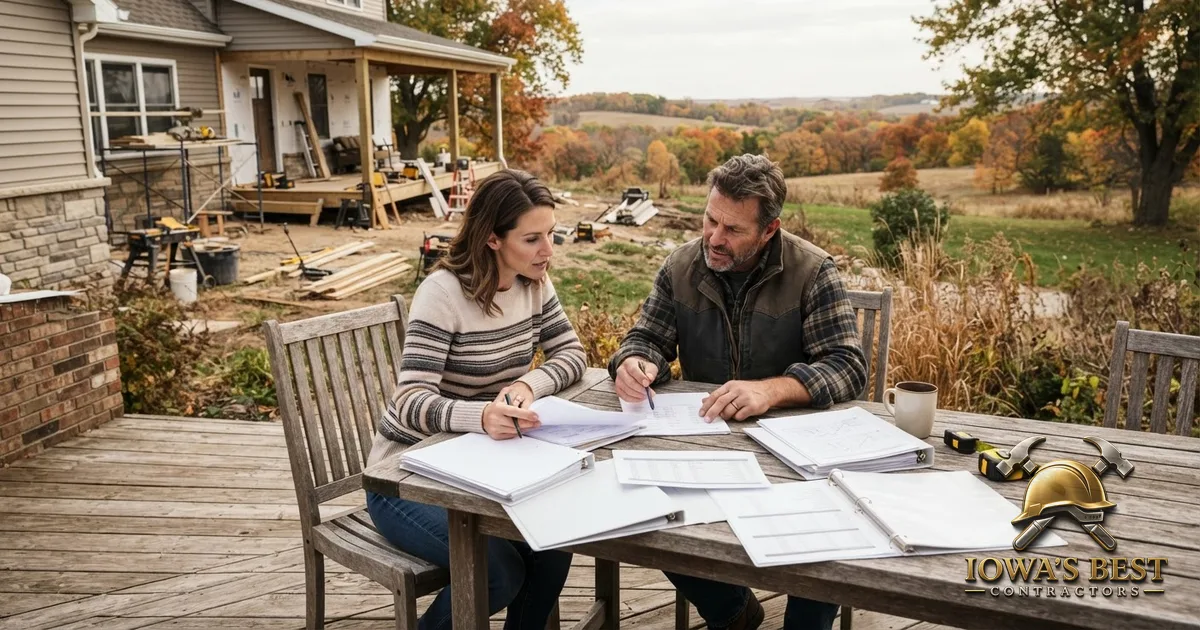
The best way to get a fair price and a quality result in Iowa is to collect at least three written, itemized bids and compare them line by line, not just by the bottom-line total. The lowest number is rarely the best value, and the highest is not always the safest. Below is a practical guide to gathering bids, reading them like a pro, and spotting the warning signs that separate a solid contractor from a costly mistake.
How many bids should you get?
Three is the sweet spot for most home projects. One bid gives you nothing to compare. Two can leave you guessing. Three gives you a realistic sense of the market rate and reveals any outlier, high or low, that deserves a second look.
For a small repair, two thoughtful bids may be enough. For a large project like a roof, addition, or full remodel, three to four is wise. Give every contractor the same scope in writing so you are comparing apples to apples. If one bidder assumes different materials or a smaller job, the totals mean nothing next to each other.
What a complete bid should include
A trustworthy Iowa contractor gives you a written, itemized estimate, not a number scrawled on a business card. Look for:
- Scope of work. A clear description of exactly what will and will not be done.
- Materials. Specific products, brands, grades, and quantities, not just "materials."
- Labor. The labor portion, and ideally a rough crew size and timeline.
- Allowances. Set dollar amounts for items you have not chosen yet, like fixtures or tile.
- Permits and inspections. Who pulls them and whether the cost is included.
- Payment schedule. A modest deposit with payments tied to milestones, not most of the money upfront.
- Timeline. Start date, rough duration, and what happens if weather or supply delays hit.
- Warranty. Labor warranty terms and how manufacturer warranties are handled.
- Cleanup and disposal. Debris haul-away and site cleanup.
If a bid is vague, ask for detail before you compare. A contractor who will not itemize before the job usually will not communicate well during it.
How to compare bids fairly
Line the bids up side by side and look past the total. Ask yourself:
- Is the scope truly identical? Differences in tear-off, prep, or materials explain most price gaps.
- What materials did each quote? A lower bid may use thinner, cheaper products that cost you later.
- What is excluded? The cheapest bid is often cheap because it leaves things out that you will pay for mid-project.
- How are unknowns handled? Look at allowances and how each contractor treats surprises like rot or code upgrades.
- Does the payment schedule protect you? Milestone payments are safer than a large upfront lump.
A bid that is dramatically lower than the others is a red flag, not a bargain. It usually means missing scope, cut corners, or a plan to raise the price with change orders once work begins.
Verify the contractor, not just the price
The price on paper only matters if the contractor is legitimate and reliable. Before you sign:
- Confirm Iowa registration. Contractors doing work in Iowa are generally required to register with the state under chapter 91C. You can verify registration and compare local pros on our directory of registered Iowa contractors, where every business is checked against the official state record and no one pays for placement.
- Ask for proof of insurance. Liability coverage and workers' compensation protect you if something goes wrong on your property.
- Check references and recent work. Ask for a few local jobs and, when possible, drive by or call past customers.
- Read reviews with a critical eye. Look for patterns, not single glowing or angry posts.
- Get everything in writing. A signed contract that matches the bid is your best protection.
Remember that state registration is not a license or an endorsement; it simply confirms the contractor is properly registered to work in Iowa. It is a starting filter, not the final word.
Iowa-specific timing and red flags
Iowa's storm season brings hail, high winds, and the occasional derecho, and big storms draw out-of-state "storm chaser" crews who knock door to door offering fast roof or siding work. Be cautious of anyone pressuring you to sign the same day, asking for a large cash deposit, or offering to "waive your deductible," which can be insurance fraud. A local, Iowa-registered contractor will still be around to honor the warranty next winter.
Timing also affects both price and availability. Spring and summer are the busiest seasons for exterior work, so bids can run higher and calendars fill fast, especially right after a hailstorm. Planning ahead and getting your bids early gives you more leverage and better scheduling. For common projects you can compare specialists directly, such as Iowa roofing contractors or Des Moines roofing contractors, and line their estimates up side by side.
Frequently asked questions
Is it rude to get multiple bids?
Not at all. Reputable contractors expect it and understand that homeowners want to compare. Getting several bids is standard practice and a sign that you are a careful, serious client, which good contractors appreciate.
Should I always choose the lowest bid?
No. The lowest bid often reflects cheaper materials, missing scope, or a plan to add charges later. Compare what each bid includes and weigh price against the contractor's reputation, insurance, and registration. The best value usually sits in the middle, not at the bottom.
How long is a contractor's bid good for?
Many bids are valid for 30 days because material prices change. If you wait longer, ask the contractor to confirm the price still holds. Getting your bids within the same window also keeps the comparison fair.
What if a contractor will not put the bid in writing?
Walk away. A refusal to provide a written, itemized estimate is a major red flag. Without it you have no protection if the scope, price, or timeline changes, and it usually signals poor communication ahead.
Ready to compare real bids?
The easiest way to gather several itemized quotes from registered local pros is to let them come to you. You can collect bids from registered contractors in minutes, or browse registered Iowa contractors by trade and city to build your own shortlist. A little comparison up front protects both your project and your wallet.