
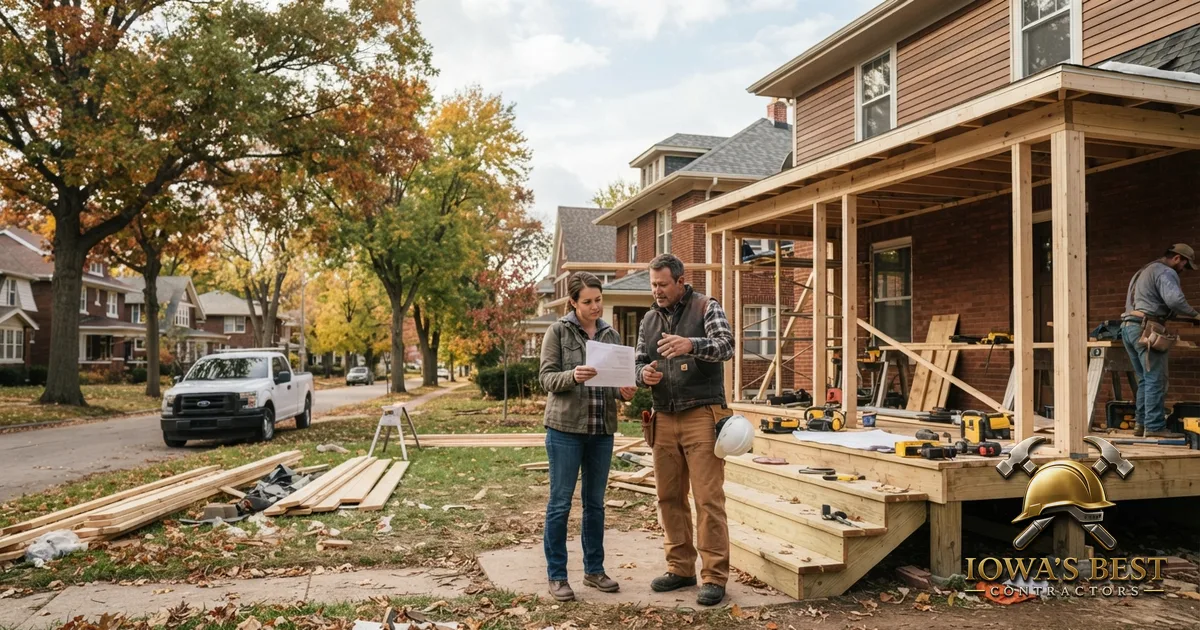
Hiring the right contractor is the single biggest factor in whether your Iowa home project goes smoothly or turns into a headache. The good news: a careful, repeatable process protects you. This step-by-step checklist walks you through vetting, bidding, contracts, and payments so you can hire with confidence, whether you are re-roofing in Des Moines or remodeling a kitchen in Cedar Rapids.
Step 1: Define your project before you call anyone
Contractors give better, more comparable bids when you are clear about what you want. Before reaching out:
- Write down the scope: what you want done, materials you prefer, and any must-haves.
- Set a realistic budget range and know your top limit.
- Gather photos, measurements, or inspiration images.
- Note your timeline and any hard deadlines.
The clearer your brief, the easier it is to compare bids apples-to-apples later.
How do I find registered contractors in Iowa?
Start with contractors who are properly registered to work in Iowa. Under Iowa Code chapter 91C, most construction contractors doing business in the state must register with the Iowa Division of Labor. Registration is not a skill license, but it is a baseline sign that a contractor is operating legitimately and can be held accountable.
Browse registered pros by trade on our directory of Iowa contractors, where every listing is checked against the State of Iowa's official registration record. We never take payment for placement, so the listings are not pay-to-play. Ask friends, neighbors, and local building-supply stores for names too, then cross-check them against the registry.
Step 3: Vet each contractor
Narrow your list to three or four candidates and dig in:
- Confirm registration with the State of Iowa.
- Verify insurance: general liability and workers' compensation. Ask for a certificate.
- Check reviews and references. Ask for recent local projects and actually call the references.
- Look at their work. Photos, and if possible, a drive-by of a completed job.
- Confirm they pull permits. Reputable contractors handle permits and inspections.
Registration confirms a contractor is properly registered in Iowa; it is not a license or an endorsement of quality. Your own vetting fills in the rest.
Step 4: Get at least three written bids
Never hire on a single quote. Request three itemized, written estimates for the same scope so you can compare fairly. A solid bid includes:
- A detailed description of the work and materials.
- Labor and material costs broken out.
- A start date and estimated completion.
- A payment schedule tied to milestones.
- Warranty terms and cleanup responsibilities.
Be wary of a bid that is dramatically lower than the others; it often signals cut corners, missing scope, or a plan to add "surprise" costs later. The middle of the range is frequently the best value.
Step 5: Read and sign a solid contract
Get everything in writing before work begins. A good contract protects both sides and should include:
- Full scope of work and materials specifications.
- Total price and a milestone-based payment schedule.
- Start and completion dates.
- Who pulls permits.
- Warranty and lien-waiver terms.
- A clear change-order process for anything added mid-project.
Never rely on verbal promises. If it matters, it goes in the contract.
Step 6: Structure payments to protect yourself
Payment structure is one of your strongest safeguards. Follow these rules:
- Keep the deposit modest. A reasonable down payment is common; paying most of the job up front is a red flag.
- Tie payments to milestones, not the calendar. Pay as verifiable work is completed.
- Hold a final payment until the work passes inspection and you are satisfied.
- Get lien waivers as you pay, confirming subcontractors and suppliers have been paid.
- Avoid cash-only deals. Pay by check or card so you have a record.
Step 7: Manage the project and close it out
Stay engaged without micromanaging. Keep a simple log of decisions and change orders in writing. When the work is done:
- Walk the project with the contractor and make a punch list of anything unfinished.
- Confirm final inspections passed.
- Collect all warranties, manuals, and lien waivers.
- Make the final payment only after everything checks out.
Hiring the right contractor in Iowa requires a disciplined, step-by-step process: define your project scope clearly, verify that contractors are registered with the Iowa Division of Labor as required under Iowa Code chapter 91C, check insurance and references, obtain at least three written bids for the same scope, insist on a detailed contract that includes milestone-based payments, and never pay the bulk of the job up front. As of July 2026, Iowa registration remains a legitimacy baseline (not a skill license), so homeowners must still vet quality, insurance, and references themselves. Tie every payment to completed, inspected work, collect lien waivers as you go, and hold final payment until the project passes inspection and you are fully satisfied.
Iowa-specific considerations
Iowa's climate shapes many projects. Storm season brings hail and derecho winds that spike demand for roofers and can attract out-of-state "storm chasers." Freeze-thaw cycles punish concrete and foundations, and hard winters make ice dams and moisture management real concerns. Prioritize local contractors who understand these conditions and will be around to honor warranties. After a major storm, be especially cautious of crews going door-to-door with high-pressure pitches.
Red flags to walk away from
- No Iowa registration or proof of insurance.
- Demands for large cash payments up front.
- High-pressure "sign today" sales tactics.
- No written contract or vague, non-itemized bids.
- Offers to skip permits or "waive your insurance deductible."
- A bid far below all the others.
Frequently asked questions
Do contractors have to be registered in Iowa?
Most construction contractors doing business in Iowa must register with the state under chapter 91C. Registration is not a competency license, but it is a legitimacy baseline. Always confirm a contractor is registered before hiring.
How many bids should I get?
At least three, all for the same scope, so you can compare fairly. This helps you spot both overpriced bids and suspiciously low ones that may hide missing work.
How much should I pay up front?
A modest deposit is normal, but you should never pay most of the job before work begins. Tie payments to completed milestones and hold a final payment until the work passes inspection.
What should be in the contract?
Scope of work, materials, total price, milestone payment schedule, start and completion dates, who pulls permits, warranty terms, and a change-order process. Get it all in writing before work starts.
Ready to find a contractor?
Start with a shortlist of registered pros. Browse Iowa contractors by trade or explore your county to find companies near you. A careful hiring process is the best investment you can make in any home project.