
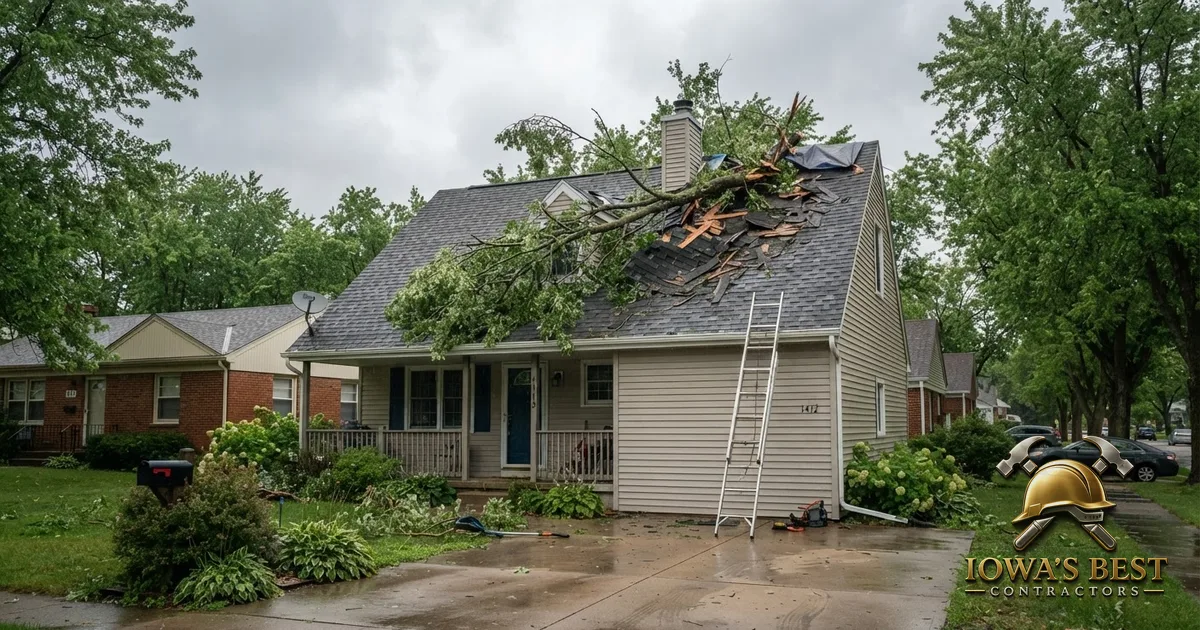
After a storm drops a tree limb on your Iowa roof, immediately document the damage with photos, cover any openings with tarps to prevent water intrusion, and call your homeowner's insurance. Then search Iowa's Best Contractors for a state-registered roofer to assess structural damage and provide a repair estimate.
What Should I Do Immediately After a Tree Falls on My Roof?
The first hour after a tree hits your Iowa roof is critical. Start by ensuring everyone in your household is safe and the home is structurally sound enough to remain inside. If you see sagging ceilings, hear cracking sounds, or notice the roof visibly collapsing, evacuate immediately and call 911. Once you confirm it's safe to stay, document everything with photos and video from multiple angles—the tree, the roof damage, interior water intrusion, and the surrounding property. These records are essential for your insurance claim. Next, cover any holes or openings with tarps or plastic sheeting secured with boards to prevent rain from causing secondary water damage to your attic, insulation, and ceilings. Do not climb onto the roof yourself if it appears unstable.
Call your homeowner's insurance company as soon as possible to report the claim. Most Iowa insurers have 24-hour claims lines, and storm events often trigger a surge of calls, so file early. Ask whether they will send an adjuster and what temporary repairs you're authorized to make. Keep all receipts for tarps, emergency services, and temporary repairs—most policies reimburse these costs.
How Much Does Tree Damage Roof Repair Cost in Iowa?
Repair costs depend on the extent of the damage and the size of the tree. A small limb that punctures a few shingles might cost $500 to $1,500 to patch and re-shingle. A large tree that crushes roof decking, trusses, or rafters can run $5,000 to $15,000 or more, especially if the interior sustained water damage. If the tree compromised the structural integrity of your roof, you may need a full roof replacement, which in Iowa typically ranges from $8,000 to $20,000 depending on the home's size and the roofing material.
Your insurance deductible will apply. Iowa wind and hail deductibles are often percentage-based (1% to 5% of your home's insured value) rather than flat dollar amounts, so a home insured for $250,000 with a 2% deductible means you pay the first $5,000. Review your policy before the adjuster arrives so you understand your out-of-pocket costs.
After a storm drops a tree on your Iowa roof, your priority is threefold: ensure safety, prevent further water damage with temporary tarps, and document everything for your insurance claim. Iowa homeowner's policies generally cover sudden storm damage, but you must act quickly to file and hire a state-registered roofer for a professional assessment. As of September 2026, the state registers general contractors but does not license roofers, so verify registration, get multiple written estimates, and ask for proof of liability insurance before signing any contract. Avoid storm-chasing contractors who knock on your door immediately after severe weather—they often leave town before finishing the work.
What Does Insurance Cover and What Do I Pay?
Most Iowa homeowner's policies cover tree damage to your roof if the tree fell due to wind, lightning, ice, or another sudden weather event. This includes the cost to remove the tree from the roof, repair or replace damaged shingles and decking, and fix interior water damage. Policies typically do not cover removal of the tree from your yard unless it damaged a covered structure, so budget separately for hauling away the trunk and branches.
Insurance will not pay if the tree was dead, diseased, or visibly rotting and you failed to remove it. Adjusters look for signs of neglect, so if you knew the tree was hazardous, your claim may be denied. Similarly, if the tree fell from a neighbor's yard, you generally file with your own insurer first; your insurer may later subrogate against the neighbor if negligence is proven, but that's not your responsibility.
Keep detailed records of all communication with your insurer, including claim numbers, adjuster names, and inspection dates. If the adjuster's estimate seems low, you have the right to get your own independent estimate from a state-registered roofer and submit it for review.
How Do I Find a Registered Roofer in Iowa After a Storm?
Iowa does not license roofers, but the state does maintain a registry of contractors who carry workers' compensation and unemployment insurance. After a major storm, out-of-state "storm chasers" flood affected areas, often working without registration or insurance. To find a legitimate roofer, search Iowa's Best Contractors by your county or by the roofing trade. Verify the contractor's registration is active, and ask for proof of general liability insurance—registration confirms payroll compliance, not insurance coverage.
Get at least three written estimates that itemize materials, labor, and timelines. Be wary of roofers who:
- Knock on your door unsolicited immediately after the storm
- Offer to waive your insurance deductible (this is insurance fraud)
- Demand large upfront deposits before starting work
- Pressure you to sign a contract on the spot
- Claim they can get your claim approved when others can't
A reputable roofer will provide references, a written contract, and a realistic timeline. Iowa law limits how much deposit a contractor can require, and you should never pay in full before the work is complete and inspected.
Should I Remove the Tree or Repair the Roof First?
It depends on the situation. If the tree is still resting on the roof and poses a risk of further damage, a tree removal service should stabilize or remove it before the roofer begins work. However, if the limb has already fallen away or is small enough that the roofer can safely work around it, roof repairs to stop water intrusion take priority. Coordinate with both contractors and your insurance adjuster to determine the safest sequence.
Some roofing contractors also offer tree removal, but many do not. If you need a separate tree service, verify they are registered and insured. Do not let anyone cut a tree that is tangled in power lines—call your utility company first.
Once the tree is clear and the roof is tarped, the roofer can assess the full extent of the damage. If decking or trusses are broken, repairs must meet Iowa building codes, and some jurisdictions require a permit for structural work. Your roofer should handle permit applications, but confirm this in your contract.
What Happens If Another Storm Hits Before Repairs Are Done?
Iowa's spring and summer storm season can bring multiple severe weather events in quick succession. If your roof is tarped and a second storm causes additional damage, contact your insurance adjuster immediately to amend your claim. Tarps are considered reasonable temporary protection, so you should not be penalized for damage that occurs while waiting for repairs, as long as the tarps were properly secured.
If the roofer cannot start work for weeks due to high demand, ask your insurer about additional living expenses coverage. Some policies will pay for temporary housing if your home is uninhabitable due to roof damage, though this is less common for partial damage that doesn't force you to move out.
To find a state-registered roofer near you and compare your options, search by county or by trade on Iowa's Best Contractors. Verify registration, get multiple bids, and make sure the contractor you hire will be around to honor any warranty after the storm cleanup is over.
Frequently asked questions
Does homeowner's insurance cover tree damage to my roof in Iowa?
Most Iowa homeowner's policies cover sudden tree damage from storms, wind, or lightning. They typically do not cover damage from a tree you neglected to maintain or one that fell due to gradual decay. Review your policy's wind and falling-object provisions, and document the storm event with photos and weather reports.
Should I remove the tree limb myself or wait for a professional?
If the limb is small and you can safely remove it from the ground, you may do so. For large limbs, limbs tangled in power lines, or anything requiring you to climb onto a damaged roof, hire a licensed tree service or roofing contractor. Walking on a compromised roof can cause further structural damage and voids some insurance claims.
How do I find a legitimate roofer after storm damage in Iowa?
Search the state-registered contractor directory at Iowa's Best Contractors by county or trade. Verify the roofer's active registration, get at least three written estimates, and ask for proof of liability insurance. Avoid door-to-door solicitors who pressure you to sign immediately after a storm.