
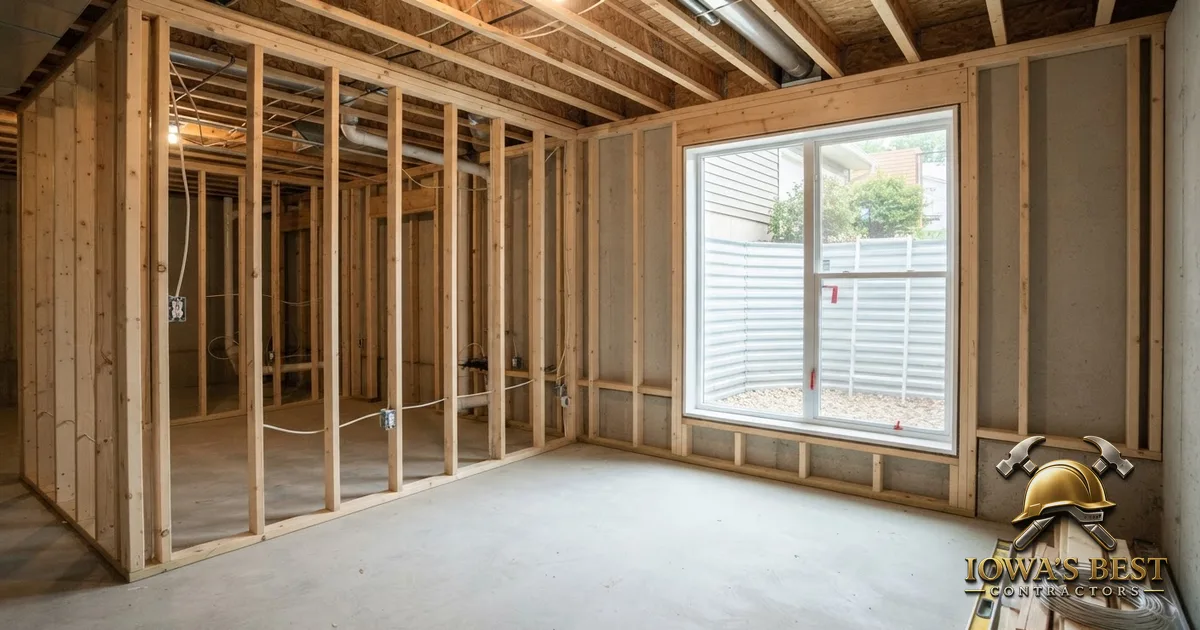
Finishing a basement in Iowa typically costs $30–$75 per square foot, depending on finishes, plumbing, and electrical work. You'll need a state-registered contractor, building permits from your city or county, and a plan to handle moisture and egress requirements that are critical in Iowa's climate.
What Does Basement Finishing Mean for Iowa Homeowners?
Basement finishing transforms an unfinished lower level into usable living space—bedrooms, family rooms, home offices, or bathrooms. In Iowa, where many homes sit on full basements, finishing that space is one of the most cost-effective ways to add square footage without building an addition. But Iowa's climate and soil conditions mean you can't just frame and drywall: moisture management, proper egress, and code compliance are non-negotiable.
A finished basement can add significant value to your home, especially in markets like Des Moines, Cedar Rapids, and Iowa City where buyers prize extra living space. The key is doing it right the first time with a registered contractor who understands Iowa building codes and local conditions.
How Much Does It Cost to Finish a Basement in Iowa?
Most Iowa homeowners spend between $30 and $75 per square foot to finish a basement, meaning a typical 800-square-foot project runs $24,000 to $60,000. Your final cost depends on:
| Factor | Impact on Cost |
|---|---|
| Finishes | Basic drywall and carpet cost less than tile, custom cabinetry, or hardwood |
| Plumbing | Adding a bathroom or wet bar requires new drains and supply lines |
| Electrical | More outlets, lighting, and circuits increase cost |
| HVAC | Extending ductwork or adding zones keeps the space comfortable |
| Egress windows | Required for bedrooms; cutting through foundation and installing a code-compliant window well adds $3,000–$5,000 per window |
| Moisture control | Waterproofing, sump pumps, or drainage systems add upfront cost but prevent disaster |
Basic finishing (open rec room, no plumbing) sits at the lower end. A full suite with bedroom, bathroom, and kitchenette pushes toward the higher range. Get detailed written estimates from at least three state-registered contractors so you can compare scope and pricing.
Why Moisture Management Matters in Iowa Basements
Iowa's clay-heavy soils and wet spring seasons make basement moisture a serious concern. Before you finish, walk your basement during and after a heavy rain. Look for:
- Standing water or damp spots on the floor
- Efflorescence (white mineral deposits) on concrete walls
- Musty odors or visible mold
- Cracks in the foundation
If you see any of these, address them before finishing. Exterior solutions—regrading soil away from the foundation, cleaning gutters, extending downspouts—are often the most effective. Interior fixes like sump pumps, perimeter drains, or waterproof membranes add cost but protect your investment.
Use mold-resistant drywall, avoid organic materials like wood studs directly against concrete, and leave access panels to your furnace, water heater, and electrical panel. Finishing over existing moisture problems is the fastest way to waste money.
As of July 2026, Iowa building codes require finished basements to meet specific moisture, egress, and ventilation standards. Any bedroom must have a code-compliant egress window (minimum 5.7 square feet of opening, no more than 44 inches above the floor) and proper HVAC. Skipping permits or ignoring these rules creates safety hazards, complicates resale, and can void insurance coverage if something goes wrong. Hire a registered contractor who pulls permits and follows Iowa code.
Do You Need Permits to Finish a Basement in Iowa?
Yes. Basement finishing is not a DIY-and-skip-permits project. Any work involving framing, electrical, plumbing, or HVAC requires a building permit from your city or county. Permit requirements vary slightly by jurisdiction, but all enforce Iowa's building and residential codes.
Permits ensure:
- Egress windows meet life-safety requirements
- Electrical work is safe and up to code
- Plumbing drains and vents function properly
- HVAC provides adequate heating and cooling
Your contractor should handle permits as part of the job. Inspectors will visit at key stages (framing, rough-in, final). Unpermitted work can complicate selling your home, and some insurance companies won't cover damage in unpermitted spaces. It's not worth the risk.
How to Hire the Right Contractor for Basement Finishing in Iowa
Basement finishing requires a general contractor registered with the State of Iowa under Chapter 91C. Registration confirms the contractor carries workers' compensation and unemployment insurance, but it's not a skills test—you still need to vet experience and references.
Follow this checklist:
- Search the directory by trade and county to find registered contractors near you.
- Verify registration status online through the Iowa Workforce Development site.
- Ask for references from at least three past basement projects. Call them.
- Confirm insurance: request certificates for general liability and workers' comp.
- Get three written bids that detail materials, labor, timeline, and payment schedule.
- Check permits: make sure the contract states the contractor will pull all required permits.
- Review the contract carefully before signing. It should include start and completion dates, payment milestones, and a process for handling changes.
Don't hire based on price alone. The lowest bid often means corners cut on moisture control, materials, or code compliance. For more guidance, read our step-by-step hiring checklist and tips on comparing bids.
What About Egress Windows and Bedrooms?
If you plan to add a bedroom in your finished basement, Iowa code requires an egress window: a window large enough for emergency escape and rescue access. The window opening must be at least 5.7 square feet, with a minimum width of 20 inches and height of 24 inches, and the sill can't be more than 44 inches above the floor.
Installing an egress window means cutting through your foundation wall and excavating outside to create a window well with a ladder or steps. This adds $3,000–$5,000 per window but is legally required and a smart safety feature. Calling a room a "bedroom" without egress is a code violation and a red flag for buyers.
Is Finishing Your Iowa Basement Worth It?
For most Iowa homeowners, yes—if done correctly. A well-finished basement adds functional square footage, increases home value, and makes your home more attractive to buyers. But only if you:
- Solve moisture problems first
- Hire a registered contractor who pulls permits
- Follow Iowa building codes, especially for egress and HVAC
- Use appropriate materials for below-grade spaces
Skip any of these steps, and you risk mold, safety issues, and a project that costs more to fix than it would have to do right the first time.
Ready to start? Search Iowa's registered contractors by trade to find experienced professionals in your area, or explore contractors by county to narrow your search locally.
Frequently asked questions
Do I need a permit to finish a basement in Iowa?
Yes. Any basement finishing project that involves framing, electrical, plumbing, or HVAC work requires a building permit from your local city or county building department. Permits ensure the work meets Iowa building codes, including egress window requirements for bedrooms. Your contractor should pull these permits as part of the job.
How do I find a registered contractor for basement finishing in Iowa?
Search the Iowa's Best Contractors directory by trade and county to find state-registered general contractors in your area. Verify their registration status, ask for references from past basement projects, and confirm they carry general liability and workers' compensation insurance. Get at least three written bids before deciding.
What's the biggest mistake homeowners make when finishing an Iowa basement?
Skipping proper moisture control. Iowa's wet springs and clay soils make basement moisture a real risk. Before finishing, address any existing water issues with exterior grading, sump pumps, or interior drainage. Use mold-resistant materials and leave access to mechanicals. Cutting corners here leads to expensive repairs later.