
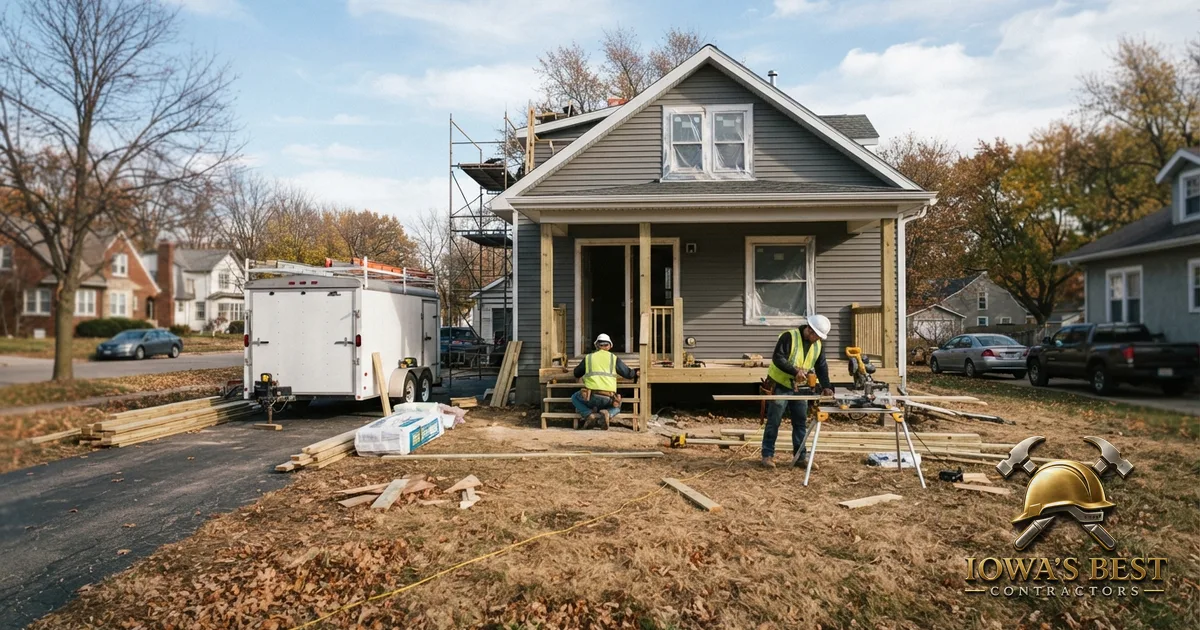
In Iowa, whether you need a permit depends on your city or county, because permits are issued and enforced locally, not by the state. As a rule of thumb, structural, electrical, plumbing, mechanical, and roofing work usually requires a permit, while cosmetic work like painting or flooring usually does not. When in doubt, call your local building department before the work starts.
Why permits matter
A permit is not just red tape. It triggers an inspection that confirms the work meets code, which protects your safety and your investment. Skipping a required permit can come back to bite you in several ways.
- Resale problems. Unpermitted work surfaces during a home sale and can kill or delay the deal, or force you to redo the work.
- Insurance denials. If unpermitted work causes damage, such as a fire from bad wiring, your insurer may deny the claim.
- Fines and forced removal. Local jurisdictions can fine you and require you to tear out and redo non-compliant work.
- Safety. The inspection exists to catch dangerous mistakes before they hurt someone.
For Iowa's climate, inspections matter even more. Proper egress windows, correctly sized heating equipment, and code-compliant roofing all affect how your home handles hard winters and storm season.
What home projects require a permit in Iowa?
While your local rules govern, these projects require a permit in most Iowa jurisdictions:
- Additions, or any change to the building's footprint or structure
- Removing or altering load-bearing walls
- New or altered electrical circuits and service panels
- New or relocated plumbing
- Furnace, air conditioner, or water heater replacement in many jurisdictions
- Roofing replacement (many Iowa cities require it, especially after storm damage)
- Decks above a certain height and size
- Finishing a basement
- Adding an egress window
- Water heater and HVAC changes
Because much of Iowa sees hail and derecho damage, roofing permits are common. Confirm the requirement before a storm-chaser crew tells you it is unnecessary.
Projects that usually do not
Most cosmetic and minor maintenance work does not require a permit:
- Interior and exterior painting
- Flooring replacement over existing subfloor
- Cabinet and countertop swaps that do not move plumbing or electrical
- Minor drywall repair
- Like-for-like fixture swaps in some jurisdictions
- Landscaping
The gray areas trip people up. Replacing a faucet is usually fine; moving the sink is not. Swapping a light fixture is often fine; adding a new circuit is not. When a project crosses into structural, electrical, plumbing, or mechanical territory, assume you need to check.
As of this guide's September 2026 update, the rule in Iowa is simple: building permits are issued by your city or county, not the State, so the same project can need a permit in one town and not the next. Structural changes, additions, decks attached to the house, new electrical circuits, plumbing and gas work are the usual triggers; paint, flooring and like-for-like fixture swaps usually are not. Unpermitted work can stall a sale and complicate an insurance claim, and fixing it after the fact costs more than the permit would have. A two-minute call to the local building department before you start costs nothing and can save thousands.
Who is responsible for pulling the building permit?
For most projects, your licensed or registered contractor pulls the permit and schedules inspections. This is generally what you want, because it puts responsibility for code compliance on the professional doing the work.
Be cautious if a contractor asks you to pull the permit as the homeowner. Owner-pulled permits are legal for work on your own home in many Iowa jurisdictions, but doing so can shift liability to you. If a contractor pushes this to avoid accountability, treat it as a red flag.
Whoever pulls it, make sure permits and inspections are settled in writing before work begins. You can find qualified pros across the state on our trades directory, which lists every Iowa state-registered contractor by specialty.
How permits fit into hiring
Permitting and hiring go hand in hand. A good contractor treats permits as a normal part of the job, not an obstacle to dodge.
- Verify every contractor against Iowa's contractor registration record under chapter 91C. Registration is not a license or an endorsement, but registered contractors are on the state's radar as required.
- Ask directly who pulls permits and schedules inspections, and get the answer in your written contract.
- Never agree to skip a required permit to save money. The savings are not worth the risk.
- Match the trade to the work. Electrical goes to electrical contractors, plumbing and HVAC to plumbing, heating, and air conditioning contractors.
Our directory takes no paid placement, so when you search a trade you see the complete, unfiltered list of registered contractors.
Who can do the work once you have the permit?
As of September 2026, 17,803 contractors are registered with the State of Iowa across 99 counties and 32 trades. Registration under chapter 91C is a compliance record, not a skills test, so use the trade lists to build a shortlist and compare itemized bids that name the permit fee as a line item.
Frequently asked questions
How much does a building permit cost in Iowa?
It varies widely by jurisdiction and project value. Small permits may cost under a hundred dollars, while permits for large projects are often based on a percentage of the project cost. Your local building department publishes its fee schedule.
What happens if I did unpermitted work already?
You can often apply for a retroactive permit, sometimes called a permit after the fact. The jurisdiction may require inspection and possibly opening finished work to verify compliance. It is better to resolve it than to leave it hanging over a future sale.
Does the state of Iowa issue building permits?
No. Building permits are issued at the city or county level. The state handles contractor registration under chapter 91C, but the permit and inspection process is local.
Do I need a permit to replace my roof in Iowa?
In many Iowa cities and counties, yes, especially for a full tear-off and replacement common after hail or derecho damage. Confirm with your local building department, and be skeptical of any roofer who insists no permit is needed.
Ready to hire? Browse the full, unbiased list on our trades directory, where every contractor appears on Iowa's registration record with no paid placement.
Do I need a permit to build a deck in Iowa?
Usually yes for a deck attached to the house or raised above grade. Permits are issued by your city or county, not the State, and the rules and fees differ by town. Our deck cost and permit guide covers footings, the ledger board and what inspectors look for.