
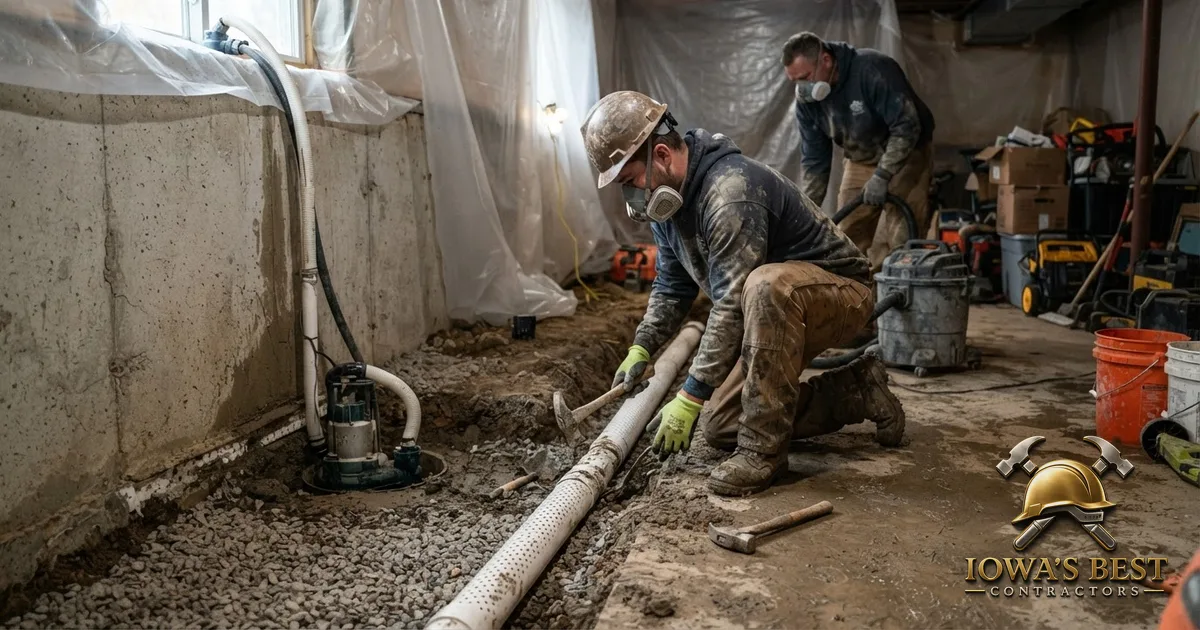
A wet Iowa basement is usually fixable, and the right solution depends on why water is getting in. Simple grading and gutter fixes might cost a few hundred dollars, while a full interior drain system with a sump pump often runs $5,000 to $15,000. Exterior excavation and waterproofing is the most thorough and the most expensive, commonly $10,000 to $25,000 or more. Every home is different, so treat these as planning ranges.
Why do Iowa basements get wet?
Iowa's climate and soils create near-perfect conditions for basement moisture. Understanding the cause is the first step, because throwing money at the wrong fix wastes both.
- Freeze-thaw pressure. Water in the soil freezes and expands against foundation walls all winter, opening and widening cracks over the years.
- Heavy spring rain and snowmelt. Saturated ground raises the water table and pushes water against your foundation, a classic problem in April and May across the state.
- Expansive clay soils. Much of Iowa sits on clay that swells when wet and shrinks when dry, stressing foundation walls.
- Poor drainage. Flat grading, short downspouts, and clogged gutters dump roof water right next to the foundation.
The water shows up as damp walls, efflorescence (the white chalky residue on concrete), puddles after storms, musty smells, or in bad cases, standing water.
Common fixes, from simple to major
Start with the cheapest fixes that address the cause. Many Iowa basements dry out with basic exterior work before any drainage system is needed.
- Grading and drainage (a few hundred to a few thousand dollars). Regrade soil to slope away from the house, extend downspouts at least six feet out, and clean or add gutters.
- Crack injection ($400 to $1,200 per crack). Polyurethane or epoxy injection seals individual cracks in poured concrete walls.
- Interior drain tile with sump pump ($5,000 to $15,000). A perimeter drain channels water to a pit where a pump ejects it. The most common comprehensive fix in Iowa.
- Exterior waterproofing ($10,000 to $25,000+). Excavating around the foundation to apply a membrane and install exterior drainage. The most durable, and the most disruptive.
- Sump pump with battery backup ($1,200 to $3,500). Essential in a state where spring storms cause power outages exactly when you need the pump running.
What drives basement waterproofing costs?
Two identical-looking basements can carry very different bids. The variables that matter most:
- The source and severity of water. A single crack is cheap. A high water table pushing through the floor is not.
- Interior versus exterior approach. Exterior work requires excavation, which multiplies labor and can mean removing landscaping, decks, or a patio.
- Foundation type and depth. Poured concrete, block, and stone foundations each behave differently and require different repairs.
- Access. Tight lots common in older neighborhoods around Dubuque, Iowa City, and Davenport make excavation harder and pricier.
The most expensive mistake is finishing a basement before solving the water problem. Fix the moisture first, then hang the drywall.
How to hire the right contractor
Basement water often ties into the foundation itself, so this is work for an experienced foundation or poured-concrete specialist, not a general handyman. A proper diagnosis is worth paying for.
- Verify every contractor against Iowa's contractor registration record under chapter 91C. Registration is not a license or an endorsement, but it is a baseline you should confirm.
- Insist on a written diagnosis of the water source before you approve a solution. Be wary of anyone who prescribes the most expensive fix without investigating the cause.
- Get at least three bids, and make sure they address the same root problem.
- Ask about the warranty on the work and whether it transfers if you sell.
You can browse registered poured concrete foundation contractors across Iowa, or start with Des Moines foundation contractors. Our directory lists every state-registered contractor with no paid placement, so the full field is in front of you.
Prevention that pays off
Even after a fix, ongoing habits keep an Iowa basement dry. Clean your gutters every spring and fall, extend downspouts well away from the house, and keep the soil sloping away from the foundation. Test your sump pump before the spring rains, and consider a battery backup if you do not already have one. A little maintenance beats a flooded basement in a May thunderstorm.
If you also see foundation cracks widening or floors going out of level, read up on repair before it worsens and consider bundling the work.
Frequently asked questions
How do I know if I need interior or exterior waterproofing?
It depends on the water source and your budget. Interior drain systems manage water that gets in and are less disruptive. Exterior waterproofing stops water before it reaches the wall and is more permanent but far more invasive. A qualified contractor should diagnose before recommending either.
Will a dehumidifier fix a wet basement in Iowa?
A dehumidifier controls humidity and helps with musty air, but it does not stop water intrusion. If water is actively entering through walls or the floor, you need to address the source, not just the symptoms.
Do I need a permit for basement waterproofing in Iowa?
Interior drainage and sump work sometimes require permits, and structural or exterior excavation usually does. Permits are issued locally, so confirm with your city or county building department, and expect your contractor to handle it.
Can I finish my basement after waterproofing?
Yes, and that is the right order. Solve the moisture problem, confirm the basement stays dry through a wet season if you can, then finish it. Finishing over an unresolved leak leads to mold and ruined materials.
Not sure what your basement needs? Collect bids from registered contractors listed on Iowa's registration record, and get a written diagnosis before you commit.