
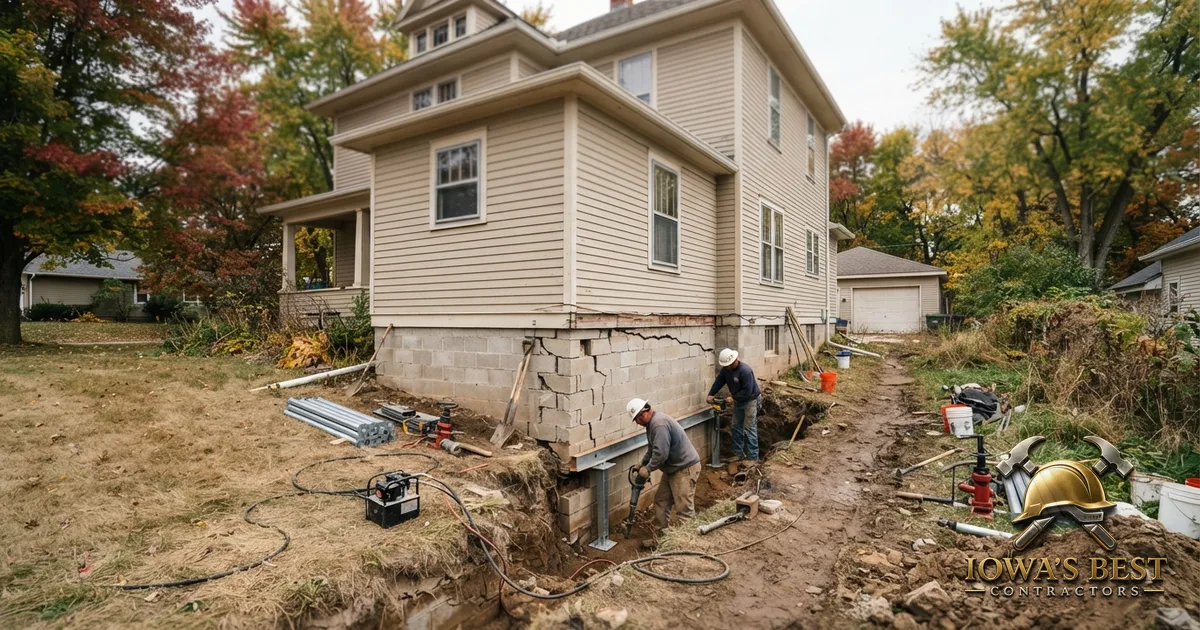
Foundation repair in Iowa ranges from a few hundred dollars for minor crack sealing to $25,000 or more for major structural stabilization with piers. Most homeowners with a moderate problem pay somewhere between $4,000 and $12,000. The right number depends entirely on the cause and severity, so a proper diagnosis comes before any price. Treat these figures as planning ranges, not quotes.
Why Iowa foundations fail
Iowa's soils and climate put steady pressure on foundations. The same forces that cause wet basements also cause structural movement over time.
- Expansive clay soils. Much of Iowa sits on clay that swells when wet and shrinks when dry. This constant cycle heaves and settles foundations unevenly.
- Freeze-thaw cycles. Water in the soil freezes and expands against foundation walls all winter, then thaws in spring, working cracks wider year after year.
- Poor drainage. Water pooling against the foundation softens supporting soil and increases hydrostatic pressure on the walls.
- Age. Many Iowa homes, especially in older neighborhoods around Dubuque, Cedar Rapids, and the Quad Cities, have block or stone foundations that need attention after decades of service.
What are the warning signs of foundation problems?
Catching foundation trouble early keeps repairs cheaper. Walk your home and look for these signs, inside and out:
- Cracks in foundation walls, especially horizontal or stair-step cracks
- Cracks above doors and windows, or doors and windows that stick
- Bowing or leaning basement walls
- Uneven, sloping, or bouncy floors
- Gaps between walls and ceilings or between trim and walls
- A chimney pulling away from the house
Hairline vertical cracks are common and often cosmetic. Horizontal cracks, stair-step cracks in block, and bowing walls are more serious and warrant prompt evaluation.
Typical repair costs by type
What you pay tracks closely with the type and extent of the problem:
- Crack sealing and injection: $400 to $1,500 per crack for non-structural cracks
- Carbon fiber straps for bowing walls: $500 to $1,000 per strap, often several needed
- Steel I-beam or wall anchor bracing: $5,000 to $15,000 depending on wall length
- Piering or underpinning for settlement: $1,200 to $3,000 per pier, and a project may need several
- Slabjacking or foam leveling: $600 to $2,500 for lifting settled concrete
- Major structural stabilization: $15,000 to $30,000+ for extensive work
Because water and structure are linked, foundation repair often pairs with drainage improvements to address the root cause. Solving the water problem protects the repair.
What drives the cost
Two homes with similar cracks can carry very different bids. The variables that matter:
- Severity and cause. A single crack is cheap. Active settlement requiring piers is not.
- Foundation type. Poured concrete, block, and stone each require different methods.
- Access and depth. Deep foundations and tight lots raise labor costs, especially where excavation is needed.
- Related work. Drainage correction, wall rebuilding, or interior finishing add to the total.
Foundation problems rarely fix themselves and usually worsen. Early evaluation almost always costs less than waiting.
How do I find a qualified foundation repair contractor in Iowa?
Foundation work is structural, so it belongs to an experienced foundation or poured-concrete specialist. A trustworthy contractor diagnoses before prescribing and explains why.
- Verify every contractor against Iowa's contractor registration record under chapter 91C. Registration is not a license or an endorsement, but it is a baseline you should confirm.
- Get a written diagnosis and repair plan, not just a price. Be wary of anyone who jumps to the most expensive fix without investigating.
- Collect at least three bids addressing the same underlying problem.
- Ask about the warranty, whether it is transferable, and what it actually covers.
You can browse registered poured concrete foundation contractors statewide, or start with Cedar Rapids foundation contractors. Our directory lists every state-registered contractor with no paid placement, so you see everyone, not just who paid to appear first.
Protecting your foundation
After repairs, ongoing care keeps your foundation stable. Keep gutters clean and downspouts extended well away from the house. Grade soil to slope away from the foundation. Maintain consistent soil moisture during dry Iowa summers, since severe drying shrinks clay and can cause new movement. Address any basement water promptly. These habits protect both your foundation and the money you spent fixing it.
Frequently asked questions
Are foundation cracks always serious in Iowa?
No. Thin vertical cracks are common in poured concrete and are often cosmetic or minor. Horizontal cracks, stair-step cracks in block walls, and any bowing are more concerning and should be evaluated by a professional promptly.
Does homeowners insurance cover foundation repair in Iowa?
Usually not, if the cause is settling, soil movement, or gradual water damage, which are typically excluded. Coverage may apply if the damage results from a covered sudden event. Check your specific policy, since terms vary.
How long does foundation repair take?
Crack injection may take a day. Installing piers or wall bracing often takes several days to a week or more, depending on scope and access. Your contractor should give you a written timeline.
Can I sell a house in Iowa with foundation problems?
You can, but you must disclose known issues, and buyers and their inspectors will likely find them. Repairing first, or negotiating a credit, usually makes for a smoother sale than leaving problems unaddressed.
Concerned about your foundation? Collect bids from registered contractors listed on Iowa's registration record, and insist on a written diagnosis before any work begins.