
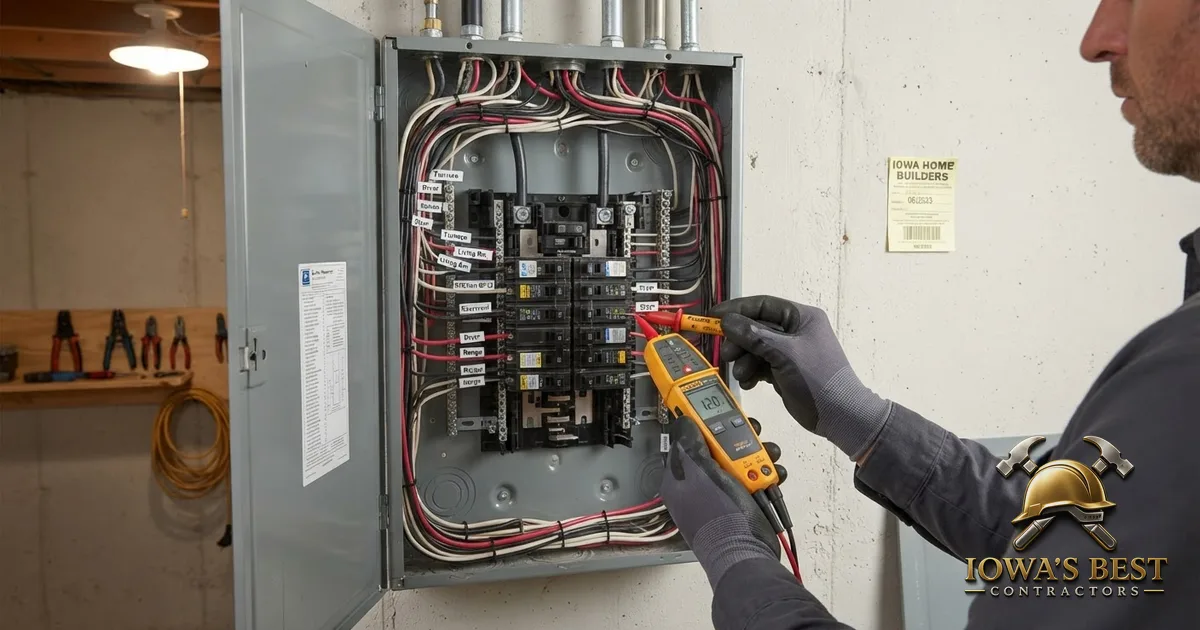
Yes, Iowa law requires a licensed electrician for nearly all residential electrical work that involves wiring, circuits, panels, or permanent fixtures. Only very minor tasks like replacing a light bulb or plug-in appliance are exempt. Most electrical work also requires a permit from your local building department.
Which Electrical Work Requires a Licensed Electrician in Iowa?
Iowa Code Chapter 103 and the rules of the Iowa Electrical Examining Board are clear: any person who installs, alters, or repairs electrical wiring, apparatus, or equipment for compensation must hold a valid Iowa electrical license. That includes journeyman electricians working under a master electrician's supervision, as well as independent master electricians.
For homeowners, this means you must hire a licensed electrician for:
- Installing or replacing electrical panels, subpanels, or circuit breakers
- Running new wiring or circuits (for outlets, lights, appliances, or additions)
- Installing or relocating outlets, switches, or permanent light fixtures
- Wiring for HVAC systems, water heaters, or other hardwired appliances
- Any work inside walls, ceilings, or electrical boxes
- Upgrading electrical service (going from 100-amp to 200-amp service, for example)
- Installing EV chargers, hot tubs, pools, or other high-load equipment
The only electrical tasks you can legally do without a license are truly minor: replacing a light bulb, plugging in or unplugging an appliance, or resetting a tripped breaker. Anything that involves opening a breaker panel, touching wiring, or making a permanent connection requires a license.
As of September 2026, Iowa law mandates that all residential electrical work involving wiring, circuits, panels, or permanent fixtures must be performed by a state-licensed electrician or by the homeowner occupying the property (with a permit and inspection). This licensing requirement exists because electrical errors cause house fires, electrocution, and costly code violations. Homeowners who hire unlicensed individuals for electrical work risk insurance claim denials, failed inspections, and liability for any resulting damage or injury. Always verify an electrician's Iowa license through the Electrical Examining Board before work begins.
Do I Need a Permit for Electrical Work in Iowa?
Yes, almost always. Iowa's electrical code (which adopts the National Electrical Code with state amendments) requires a permit for any electrical installation or alteration. Your city or county building department issues the permit, and a state electrical inspector will inspect the work.
You need a permit for:
- New circuits or wiring
- Panel upgrades or replacements
- New outlets, switches, or fixtures (beyond simple one-for-one replacements in some jurisdictions)
- Any work that changes the electrical system
You typically do NOT need a permit for:
- Replacing a broken outlet or switch with an identical unit (in most cities)
- Replacing a light fixture on an existing box and circuit
- Minor repairs that don't alter the system
Permit rules vary slightly by city, so check with your local building department. In Des Moines, Cedar Rapids, Davenport, and Iowa City, the process is straightforward: the electrician or homeowner applies for the permit, does the work, and schedules an inspection. If you skip the permit, you'll face fines, you won't be able to sell your home without disclosing unpermitted work, and your insurance may not cover damage from that work.
Can I Do Electrical Work Myself as an Iowa Homeowner?
Iowa law does allow homeowners to perform electrical work on their own single-family home that they personally occupy—but you still must pull a permit and pass inspection. You cannot do electrical work on a rental property, a flip, or someone else's home without a license.
Most homeowners choose to hire a licensed electrician anyway, for good reasons:
| Why Hire a Pro | Why It Matters |
|---|---|
| Safety | Electrical errors cause fires and fatal shocks. Pros know the code and the physics. |
| Insurance | If DIY wiring causes a fire, your insurer may deny the claim. |
| Resale | Buyers and appraisers look for permitted, professional work. |
| Time | Pulling permits, studying code, and fixing mistakes takes longer than you think. |
| Inspection | Inspectors hold homeowners to the same code standard as licensed electricians. |
If you do choose to DIY, you must follow the National Electrical Code to the letter, use the correct wire gauges and breaker sizes, install proper grounding, and pass inspection on the first try. One mistake—an undersized wire, a missing ground, an overloaded circuit—can start a fire years later.
How to Verify an Iowa Electrician's License
Iowa electricians are licensed by the Iowa Electrical Examining Board, not by the general contractor registry. This is a real professional license that requires an exam, continuing education, and proof of insurance.
Before you hire, verify the license:
- Ask the electrician for their Iowa license number and name as it appears on the license.
- Go to eeb.iowa.gov and use the license lookup tool, or call the board at (515) 725-9025.
- Confirm the license is current (not expired or suspended) and matches the person's name.
- Ask for proof of liability insurance and workers' compensation coverage.
A licensed electrician will have no problem providing this information. If someone hesitates, claims they "work under" someone else's license without being able to name that person, or offers a suspiciously low bid, walk away. Unlicensed electrical work is illegal in Iowa, and you—the homeowner—bear the consequences if something goes wrong.
You can find licensed electricians across Iowa on Iowa's Best Contractors. Every contractor on the site is registered with the state, and you can filter by county to find local pros. For a broader look at any trade, start at the trades directory or search by your county.
Frequently asked questions
Can I do my own electrical work in Iowa as a homeowner?
Iowa allows homeowners to do electrical work on their own single-family residence that they occupy, but you still must pull a permit and pass inspection. The work must meet the National Electrical Code. Many homeowners hire a licensed electrician instead because mistakes can cause fires or code violations that complicate insurance claims and resale.
How do I verify an electrician is licensed in Iowa?
Iowa electricians are licensed by the Iowa Electrical Examining Board. You can verify a license at eeb.iowa.gov or by calling the board. Check that the license is current and matches the person's name. Licensed electricians must also carry liability insurance and workers' compensation.
What happens if I hire an unlicensed electrician in Iowa?
Hiring an unlicensed person for electrical work is illegal in Iowa and puts you at serious risk. The work won't pass inspection, your homeowner's insurance may deny claims for electrical fires, and you could face fines. You'll likely have to pay a licensed electrician to redo the work correctly.