
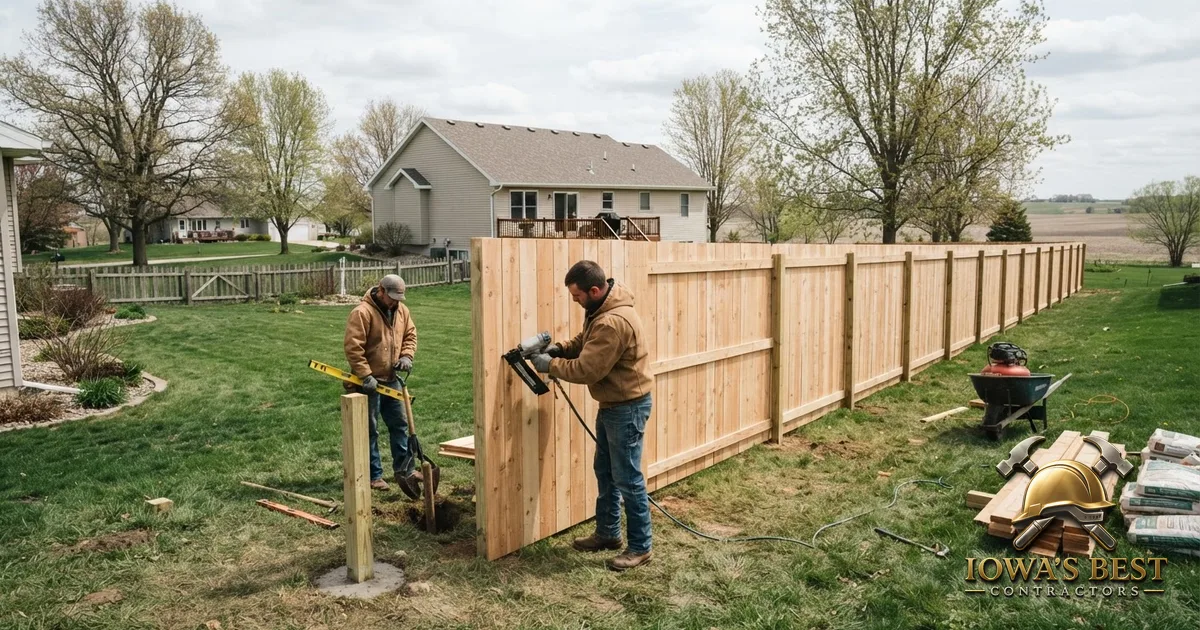
A new fence in Iowa typically costs between $2,500 and $12,000 for an average residential yard, with most projects landing in the $3,500 to $8,000 range. Price comes down mostly to material and the length of fence you need, usually $20 to $60 per linear foot installed. Wood and chain-link sit at the lower end, while vinyl, ornamental metal, and premium wood run higher. Here is a plain-English breakdown so you can budget with confidence.
Typical fence costs in Iowa by material
Most fencing is priced per linear foot, installed. Here is how the common choices tend to shake out:
- Chain-link: roughly $15 to $30 per linear foot. Durable and economical, popular for pet and yard enclosures.
- Wood privacy (cedar or treated pine): roughly $25 to $45 per linear foot. A classic Iowa look, great for privacy.
- Vinyl (PVC): roughly $30 to $60 per linear foot. Higher upfront cost but low maintenance and no repainting.
- Ornamental steel or aluminum: roughly $35 to $65 per linear foot. Elegant and strong, common for front yards and pools.
- Split-rail: roughly $15 to $30 per linear foot. Simple, rural look for marking boundaries.
These are ranges, not quotes. Costs vary with terrain, gates, post depth, and local labor, so always get itemized bids.
A new fence in Iowa typically costs between $2,500 and $12,000 for an average residential yard, with most projects landing in the $3,500 to $8,000 range as of July 2026. Price comes down mostly to material and the length of fence you need, usually $20 to $60 per linear foot installed. Iowa's freeze-thaw cycles are hard on fences, so posts must be set below the frost line in concrete to prevent heaving and leaning. The lowest bid is rarely the best value; compare at least three written estimates and confirm that the contractor is registered with the State of Iowa under chapter 91C.
What drives fence installation costs up or down?
Two yards of the same size can get very different bids. The biggest cost drivers are:
- Total length and height. More linear feet and taller panels mean more material and labor. Six-foot privacy fence costs more than four-foot.
- Gates. Each gate adds hardware and labor; a wide drive gate costs more than a single walk gate.
- Terrain. Sloped, rocky, or tree-root-filled ground slows digging and may require stepped or racked panels.
- Post setting. Concrete-set posts at a proper frost depth cost more than shallow sets but last far longer in Iowa.
- Old fence removal. Tearing out and hauling away an existing fence adds cost.
- Material grade. Premium cedar, thicker vinyl, or heavier ornamental pickets raise the total.
Iowa-specific considerations
Iowa's freeze-thaw cycles are hard on fences. When posts are not set below the frost line, the ground heaves each winter and slowly pushes them out of plumb, leaving a leaning, wobbly fence within a few years. Insist that posts be set in concrete at a proper frost depth for your area. This is the single most important detail for a fence that stays straight.
Iowa weather also brings high winds and the occasional derecho. Solid privacy panels act like a sail, so wind bracing, quality posts, and correct spacing matter. For wood, choose rot-resistant cedar or properly treated lumber and plan to seal or stain it to survive humid summers and wet snow. Before any post goes in the ground, call Iowa One Call (811) so buried gas, electric, and utility lines are marked. Hitting a line is dangerous and expensive.
Permits, property lines, and neighbors
Many Iowa cities require a permit for a new fence and have rules on height, especially in front yards, and on corner lots where visibility matters. Homeowners associations may add their own rules on style and color. Before you build:
- Check local height limits and setback rules.
- Confirm your exact property line; a survey prevents disputes and the costly job of moving a misplaced fence.
- Talk to neighbors early, especially if the fence sits near a shared line.
- Locate the good (finished) side facing out, which is the neighborly custom and sometimes required.
A reputable contractor knows the local rules and will pull the permit as part of the job. Get it in writing so responsibility is clear.
How to choose a fencing contractor
The lowest bid is rarely the best value. Compare at least three written estimates and look at what each includes, not just the bottom line. A trustworthy installer will:
- Provide an itemized estimate covering materials, post depth and setting method, gates, old-fence removal, and cleanup.
- Set posts at proper frost depth in concrete.
- Carry liability insurance and show proof.
- Be registered with the State of Iowa as a contractor.
You can confirm registration and compare local pros across our directory of registered Iowa contractors. Every business listed appears on the State of Iowa's official registration record under chapter 91C, and we never take payment for placement. In a metro like Davenport you can browse local pros to find companies near you. Keep in mind that state registration is not a license or an endorsement; it simply confirms the contractor is properly registered to work in Iowa.
How many fencing and specialty contractors are registered in Iowa?
As of September 2026, 1,787 contractors are registered with the State of Iowa under the trade All Other Specialty Trade Contractors. The largest concentrations are in Des Moines (128), Cedar Rapids (63), Sioux City (37), West Des Moines (33), Ankeny (27). The statewide list covers every county, alphabetically, straight from the public record.
Registration is a compliance record with the State, not a rating of quality, so use the list to build a shortlist and compare itemized bids from at least three of them.
Frequently asked questions
How deep should fence posts be set in Iowa?
Posts should reach below the local frost line, commonly around 36 to 42 inches in much of Iowa, and be set in concrete. Setting posts too shallow is the top cause of leaning fences here, because the ground heaves during freeze-thaw cycles.
Which fence material lasts longest in Iowa's weather?
Vinyl and ornamental metal generally need the least maintenance and hold up well to sun, wind, and moisture. Quality cedar lasts a long time if sealed and maintained. Chain-link is very durable but offers less privacy. The best choice balances your budget, privacy needs, and how much upkeep you want.
Do I need a permit to build a fence in Iowa?
Often yes. Many Iowa cities require a fence permit and regulate height and placement, particularly in front yards and on corner lots. Check with your local building department, and confirm your property line before you start.
How long does fence installation take?
A typical residential fence takes one to three days once materials arrive and the layout is set. Concrete-set posts may need time to cure before panels or gates go on. Larger yards, difficult terrain, or old-fence removal add time.
How much does it cost to fence 2 acres in Iowa?
Two acres is about 87,000 square feet, and a square lot that size has a perimeter of roughly 1,180 linear feet. At the installed ranges in this guide that is about $18,000 to $35,000 for chain-link or split-rail ($15 to $30 per foot) and $30,000 to $53,000 for wood privacy ($25 to $45 per foot), before gates, corners and rough terrain. Long rural runs are usually quoted per foot with gates as a separate line, so ask for the per-foot rate in writing.
What does a vinyl fence cost to install in Des Moines?
Vinyl (PVC) fencing runs roughly $30 to $60 per linear foot installed across Iowa as of September 2026, and Des Moines-area quotes fall inside that range; the difference between bids is usually post depth, gates and haul-away rather than the panels. Compare at least three itemized bids from specialty trade contractors in Des Moines.
Ready to get accurate fencing bids?
The best way to know your real number is to get multiple itemized quotes from registered local pros. You can collect bids from registered contractors in minutes, or browse registered Iowa contractors to build your shortlist. A little comparison up front protects both your yard and your wallet.