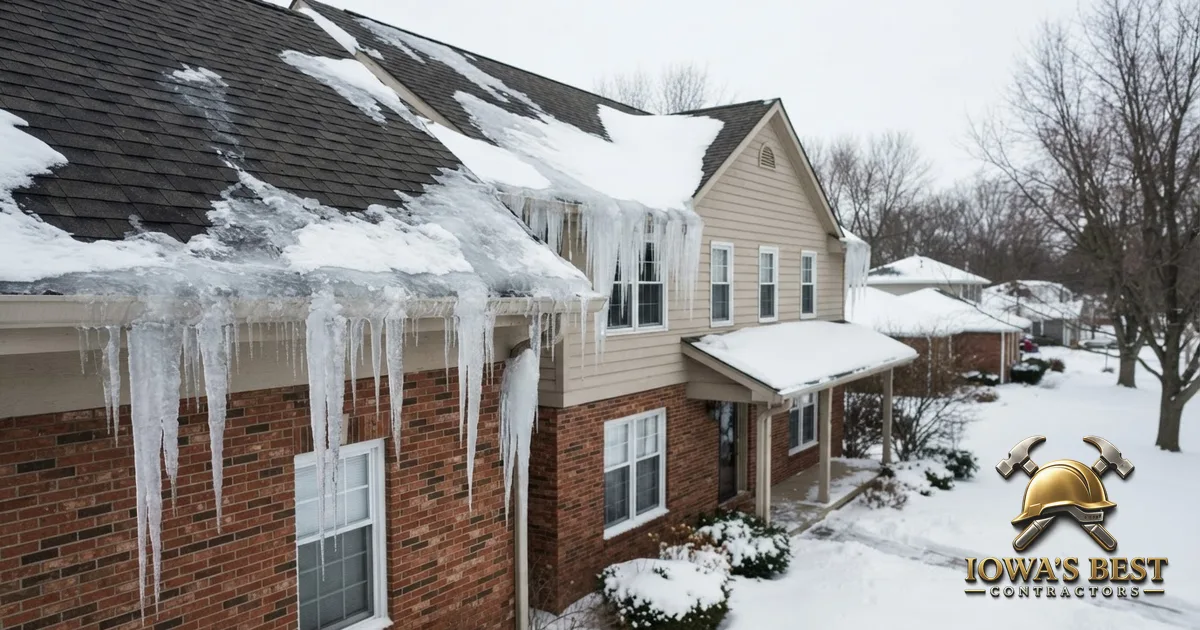
If you have ever seen thick icicles hanging from your eaves and a ridge of ice building up at the edge of your roof, you have seen an ice dam. In Iowa's long, cold winters they are common and can cause serious water damage inside your home. The good news: ice dams are largely preventable once you understand what causes them. Here is how they form, how to stop them, and how to deal with one safely if it is already there.
What is an ice dam?
An ice dam is a ridge of ice that forms at the edge of a roof and prevents melting snow from draining off. As more snow melts higher up the roof, the water flows down, hits the ice dam, and pools behind it. That trapped water can back up under your shingles and leak into the attic, ceilings, and walls, causing stains, mold, rot, and ruined insulation.
The telltale signs are large icicles at the eaves, ice building up along the roof edge, and sometimes water stains on interior ceilings near exterior walls.
What causes ice dams to form on roofs?
Ice dams come down to one thing: an uneven roof temperature. Here is the chain of events:
- Heat escapes from your living space into the attic, warming the underside of the roof deck.
- Snow on the warm upper part of the roof melts.
- The meltwater runs down to the cold eaves, which hang past the heated part of the house and stay below freezing.
- There, the water refreezes, building a dam of ice.
- More meltwater pools behind the dam and works its way under the shingles.
The root causes are almost always too much heat loss into the attic and poor attic ventilation, sometimes made worse by clogged gutters that give ice a place to start. Iowa's deep snow and sustained cold create ideal ice-dam conditions, especially on homes with older or under-insulated attics.
How to prevent ice dams
Prevention is far cheaper than repairing water damage. The goal is to keep your entire roof deck cold and uniform. Focus on these fixes:
- Seal attic air leaks. Gaps around light fixtures, attic hatches, plumbing stacks, and ductwork let warm air rise into the attic. Sealing them is the highest-impact step.
- Add attic insulation. Bringing insulation up to a proper level slows heat loss so snow does not melt unevenly. This is a job for a drywall and insulation contractor.
- Improve attic ventilation. Soffit and ridge vents keep the attic cold by flushing warm air out, keeping the roof deck near the outdoor temperature.
- Keep gutters clean in fall so meltwater can drain instead of pooling and freezing.
- Install ice-and-water membrane along the eaves when you re-roof. This waterproof underlayment is one of the best defenses against leaks and is standard on quality Iowa roofs.
Together, air sealing, insulation, and ventilation solve the vast majority of ice-dam problems for good.
Ice dams form when heat escapes from your living space into the attic, warming the roof deck unevenly. Snow melts on the warm upper roof, then refreezes at the cold eaves, creating a ridge of ice that traps meltwater behind it. That trapped water backs up under shingles and leaks into attics, ceilings, and walls. Prevention focuses on three fixes: sealing attic air leaks around fixtures and penetrations, adding insulation to slow heat loss, and improving attic ventilation with soffit and ridge vents to keep the entire roof deck cold and uniform. As of July 2026, these combined measures remain the most effective long-term solution to ice dam problems in Iowa homes.
How to safely deal with an existing ice dam
If an ice dam is already forming, act carefully; this is where people get hurt or damage their roofs.
- Rake the snow. Use a roof rake from the ground to pull snow off the lower few feet of roof after each snowfall. Less snow means less meltwater to freeze.
- Do not chip at the ice. Hacking at an ice dam with a hammer or ax can wreck your shingles and gutters and is dangerous.
- Do not climb an icy roof. Falls from roofs cause serious injuries every winter. Leave anything beyond ground-level raking to a pro.
- Calcium chloride, used carefully, can melt a channel through a dam in an emergency, but avoid rock salt, which corrodes and stains.
- Address interior leaks by drying affected areas and watching for mold.
For a stubborn or large ice dam, hire a professional who has the equipment to steam it off safely without damaging the roof. Registered Iowa roofing contractors can remove dams and diagnose the underlying insulation or ventilation problem so it does not come back. In the Corridor you can browse Cedar Rapids roofing contractors directly.
Iowa-specific considerations
Iowa's winters are ideal ice-dam weather: repeated snowfalls, extended stretches of below-freezing temperatures, and warmer daytime thaws followed by hard overnight refreezing. Older homes across Des Moines, Cedar Rapids, Waterloo, and Dubuque often have under-insulated attics that make dams worse. If summer hail or derecho winds damaged your roof, compromised shingles and flashing give ice-dam meltwater an even easier path inside, which is why a fall roof inspection matters so much. Fixing the attic (air sealing, insulation, ventilation) usually solves the problem more permanently than treating the roof surface alone.
When to call a professional
Call a pro when you have recurring ice dams, active interior leaks, a large or thick dam, or a steep or high roof you cannot safely rake. A qualified contractor can remove the dam safely and, just as important, fix the root cause in your attic. Every contractor in our directory appears on the State of Iowa's registration record under chapter 91C, and we never take payment for placement. Registration confirms a contractor is properly registered to work in Iowa; it is not a license or an endorsement, so still check insurance and references.
Frequently asked questions
Are ice dams covered by homeowner's insurance?
Many policies cover sudden interior water damage from ice dams, but coverage varies and gradual damage or the removal itself may not be included. Document everything and check your policy. Preventing dams is always cheaper than filing a claim.
Will more attic insulation stop ice dams?
Insulation helps a lot, but only alongside air sealing and good ventilation. The goal is a cold, uniform roof deck. Adding insulation without sealing air leaks and venting the attic often falls short.
Can I remove an ice dam myself?
You can safely rake snow off the lower roof from the ground and, in an emergency, use calcium chloride to melt a drainage channel. Do not chip at the ice or climb an icy roof; leave larger dams to a professional with steaming equipment.
Do ice dams mean my roof is bad?
Not necessarily. Ice dams usually point to attic heat loss and poor ventilation rather than a defective roof. That said, damaged shingles or flashing make leaks worse, so a roof inspection is wise if you keep getting dams.
Stop ice dams for good
Ice dams are a solvable problem. Seal your attic, add insulation, improve ventilation, and keep gutters clear, and you will likely never see another one. For dam removal or to fix the root cause, collect bids from registered contractors or browse registered roofing contractors near you. A dry attic and a warm, worry-free winter are worth it.