
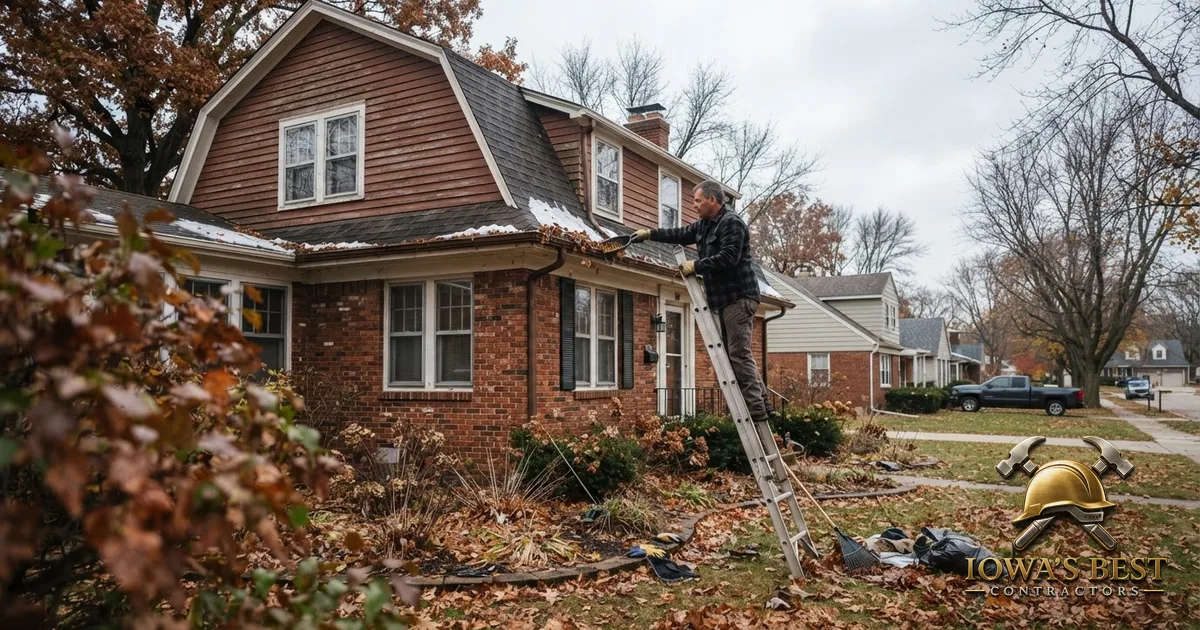
Fall is the most important maintenance season for Iowa homeowners. The weeks before the first hard freeze are your window to protect your home from the punishing winter ahead, when subzero temperatures, ice dams, and freeze-thaw cycles go looking for any weak spot. This checklist walks you through the tasks that matter most, what you can do yourself, and when to call a pro.
Inspect and prep your roof
Your roof is your first line of defense against snow and ice. Before winter:
- Look for cracked, curled, or missing shingles, especially after summer's hail and derecho storms.
- Check flashing around chimneys, vents, and skylights for gaps.
- Make sure attic insulation and ventilation are adequate; this is key to preventing ice dams later.
- Clear any debris and trim overhanging branches that could break under snow and ice.
If your roof took storm damage over the summer or is showing its age, handle repairs before the snow flies. A small leak becomes a big one once ice forms. Compare registered Iowa roofing contractors if you need a professional inspection or repair; in the metro you can go straight to Des Moines roofing contractors.
Clean gutters and downspouts
Clogged gutters are a leading cause of winter damage in Iowa. When leaves and debris block the flow, meltwater backs up, refreezes, and contributes to ice dams and fascia rot. Do this:
- Clean out all leaves and debris after most of the leaves have fallen.
- Flush downspouts and make sure they carry water at least a few feet away from the foundation.
- Check for sagging sections and loose fasteners.
- Consider gutter guards if you have many trees.
Directing water away from the foundation also reduces the freeze-thaw pressure that cracks basement walls.
Service your heating system
You do not want your furnace failing on the coldest night of the year. Before heating season:
- Replace the furnace filter and plan to change it regularly through winter.
- Schedule a professional tune-up and safety inspection.
- Test your thermostat and consider a programmable or smart model.
- Test carbon monoxide detectors and replace batteries; this is critical with combustion heating.
An annual tune-up from a licensed heating and cooling contractor catches small problems before they become no-heat emergencies and keeps the system running efficiently, which lowers your winter bills.
Protect your plumbing
Frozen pipes are among the most expensive and preventable winter disasters. To guard against them:
- Disconnect, drain, and store garden hoses.
- Shut off and drain outdoor faucets and sprinkler systems.
- Insulate pipes in unheated areas like crawl spaces, garages, and basements.
- Know where your main water shutoff is in case a pipe does burst.
- On extreme-cold nights, let a faucet drip and open cabinet doors to warm pipes on exterior walls.
A licensed plumber can insulate vulnerable lines and add frost-proof fixtures if you have had trouble before.
Seal up the exterior
Small gaps let in cold air, drive up heating costs, and give water a path to freeze and expand:
- Caulk and weatherstrip around windows and doors.
- Seal cracks in siding, trim, and around penetrations.
- Check that your caulking around tubs, sinks, and exterior joints is intact.
- Inspect the foundation for cracks and seal them before freeze-thaw widens them.
Reversing ceiling fans to clockwise pushes warm air back down and helps rooms feel warmer without touching the thermostat.
Prepare the yard and outdoor equipment
- Rake leaves off the lawn so they do not smother the grass under snow.
- Trim dead branches that could fall under ice and snow loads.
- Store or cover patio furniture and grills.
- Service your snowblower and stock up on a concrete-safe de-icer (avoid harsh salts on newer concrete).
- Mark driveway edges if you plow, so you avoid damaging the lawn or slab.
Iowa homeowners face a demanding combination of deep cold, heavy snow, and repeated freeze-thaw cycles each winter. As of July 2026, the most critical fall maintenance tasks remain roof inspection after summer storm damage, gutter cleaning to prevent ice dam formation, furnace servicing by a licensed heating contractor, and protecting plumbing in unheated spaces. The freeze-thaw cycle is particularly destructive to concrete, foundations, and roofing systems, making October the ideal window to complete weatherproofing before the first hard freeze arrives and winter weather conceals existing damage.
What makes fall maintenance different in Iowa?
Iowa winters combine deep cold, heavy snow, and repeated freeze-thaw swings, which is a tough mix. The freeze-thaw cycle is especially hard on concrete, foundations, and roofs, so anything you can do in fall to keep water out and heat in pays off. Ice dams, a common Iowa problem, start with poor attic insulation and ventilation combined with clogged gutters, so the roof, gutter, and insulation tasks above are your best defense. And because a summer of hail and derecho winds may have left hidden damage, fall is the right time for a careful roof inspection before snow hides the evidence.
When should I hire a professional for fall home maintenance?
Do the ladder-free basics yourself, but bring in a pro for roof repairs, furnace service, electrical work, and anything involving heights or gas. Registered contractors are worth it for safety-critical systems. Every contractor in our directory is checked against the State of Iowa's registration record under chapter 91C, and we never take payment for placement. Registration confirms a contractor is properly registered to work in Iowa; it is not a license or an endorsement, so still check references and insurance.
Frequently asked questions
When should I do fall maintenance in Iowa?
Aim to finish the major tasks by mid-to-late October, before the first hard freeze. Roof, gutter, plumbing, and furnace work should all be done while temperatures are still mild enough to work safely.
How do I prevent ice dams?
Ice dams form when heat escaping into the attic melts snow that refreezes at the cold eaves. Prevent them with good attic insulation and ventilation, clean gutters, and a properly sealed roof. Address these in fall before snow arrives.
Should I get my furnace serviced every year?
Yes. An annual professional tune-up improves safety, catches worn parts before they fail, and keeps the system efficient. It is well worth the cost to avoid a no-heat emergency in an Iowa January.
How do I keep pipes from freezing?
Drain outdoor faucets, insulate pipes in unheated spaces, seal air leaks near plumbing, and on extreme nights let faucets drip and open cabinet doors. Know where your main shutoff is in case a pipe bursts.
Get ahead of winter
A weekend of fall maintenance prevents the most common and costly Iowa winter damage. For the jobs that need a pro, collect bids from registered contractors or browse registered heating and cooling contractors and roofing contractors near you. A little effort now means a warmer, drier, worry-free winter.