
Winterizing your Iowa home before the first hard freeze comes down to protecting your pipes, servicing your heating system, sealing drafts, and getting your roof and gutters ready for snow and ice. Do it in the fall, ideally by mid to late October, and you head off frozen pipes and emergency repairs when the temperature drops below zero. Here is a practical, Iowa-specific checklist.
How do I protect my pipes from freezing?
Frozen pipes are the most expensive winter surprise in Iowa, and a burst pipe can flood a home in minutes. Prevention is simple and cheap compared to the damage.
- Disconnect and drain garden hoses, and shut off and drain outdoor spigots or install frost-proof hose bibs.
- Insulate pipes in unheated spaces like crawlspaces, garages, and along exterior walls with foam sleeves.
- Know where your main water shutoff is, so you can act fast if a pipe does burst.
- On the coldest nights, let a faucet drip and open cabinet doors under sinks on exterior walls to let warm air reach the pipes.
- If you leave town, never set the thermostat below 55 degrees, and consider draining the system for longer absences.
A plumbing, heating, and air conditioning contractor can insulate vulnerable lines and add frost-proof fixtures before the cold sets in.
When should I service my furnace before winter?
Your furnace works hardest exactly when you least want it to fail. A fall tune-up keeps it running safely and efficiently through an Iowa winter.
- Have a professional inspect and tune the furnace annually, ideally before the first cold snap when technicians are less swamped.
- Replace the furnace filter, and keep replacing it every one to three months through the season.
- Test your thermostat, and consider a programmable or smart model to trim heating bills.
- Install or test carbon monoxide detectors. This is critical, because heating season is when CO risk is highest.
- If you heat with a boiler, wood stove, or fireplace, have chimneys and flues inspected and cleaned.
Booking service early matters. Once the first freeze hits, Des Moines HVAC contractors and crews statewide get booked solid with no-heat emergency calls.
Seal drafts and add insulation
Iowa wind finds every gap. Sealing air leaks is one of the cheapest ways to cut heating bills and stay comfortable.
- Add weatherstripping around doors and caulk gaps around windows.
- Check attic insulation, since heat rises and an under-insulated attic bleeds warmth all winter.
- Seal gaps where pipes, wires, and vents penetrate exterior walls.
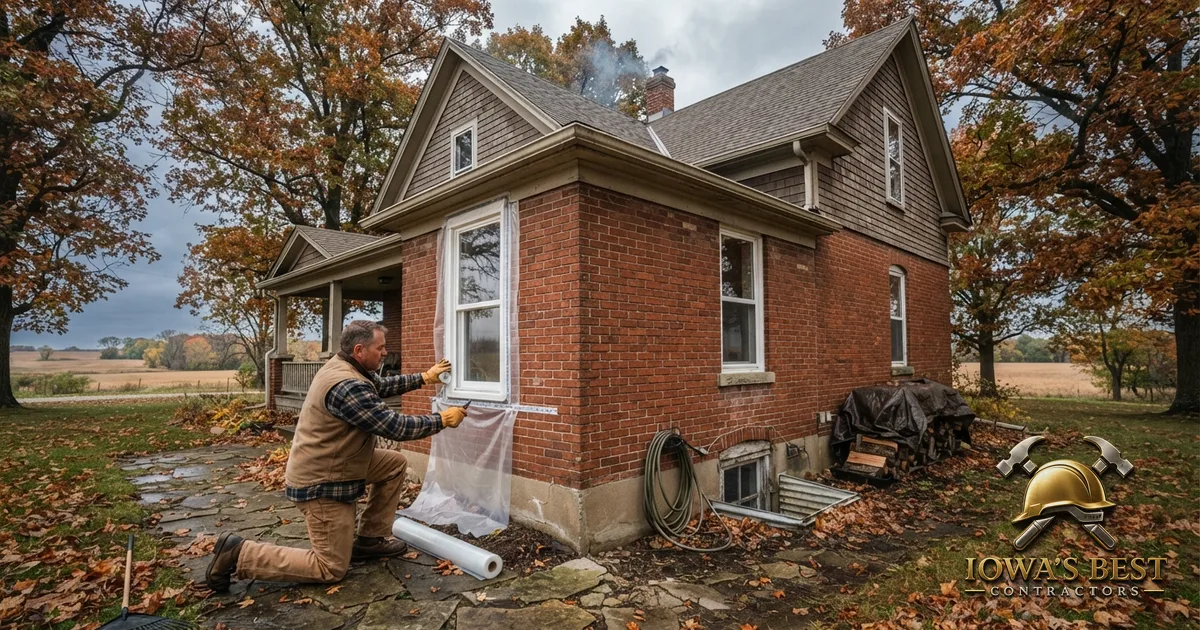
- Use a door draft stopper on exterior doors, and consider window insulation film on older single-pane windows.
The cheapest heat is the heat you do not lose. A weekend of sealing and weatherstripping often pays for itself in a single Iowa winter.
Prepare your roof and gutters
Snow load and ice dams are real hazards in Iowa. A little fall preparation prevents leaks and interior water damage.
- Clean gutters and downspouts so melting snow drains freely instead of forming ice dams.
- Extend downspouts away from the foundation to keep meltwater from pooling against it.
- Have a professional inspect the roof for loose or damaged shingles, especially after a hail or derecho season.
- Confirm your attic is properly ventilated and insulated, which is the real cure for ice dams.
- Trim tree branches that could snap under ice and snow and fall on the roof.
If you spot roof damage, a roofing contractor can make repairs before snow arrives and turns a small problem into a leak.
Outdoor and final checks
A few last tasks round out your winterization:
- Store or cover patio furniture and grills.
- Drain and shut down irrigation systems.
- Reverse ceiling fans to clockwise on low to push warm air down.
- Stock winter supplies: ice melt, a sturdy shovel, and furnace filters.
- Check that your sump pump works, since winter thaws and spring melt can flood a basement.
Doing these in early fall means you are ready when the first Arctic blast rolls through, whether you are in Sioux City, Waterloo, or Council Bluffs.
Frequently asked questions
When should I winterize my home in Iowa?
Aim to finish outdoor tasks and furnace service by mid to late October, before the first hard freeze. Iowa can see freezing nights in October, so earlier is safer than later, and you will beat the rush for HVAC appointments.
How do I keep my pipes from freezing in Iowa?
Insulate pipes in unheated spaces, disconnect outdoor hoses, seal drafts near plumbing, and let faucets drip on the coldest nights. Keep your home above 55 degrees even when away. Pipes on exterior walls are the most vulnerable.
Is a furnace tune-up really necessary every year?
Yes, annual service is worth it. It catches safety issues like cracked heat exchangers, keeps the system efficient, and reduces the chance of a mid-winter breakdown. It also often preserves manufacturer warranty coverage.
What causes ice dams and how do I prevent them?
Ice dams form when heat escaping into the attic melts roof snow, which refreezes at the cold eaves and backs water up under the shingles. The fix is proper attic insulation and ventilation, plus clean gutters, not just chipping at the ice.
Need help before the freeze? Collect bids from registered contractors listed on Iowa's registration record, and get your home winter-ready with a pro who has no paid placement in our listings.