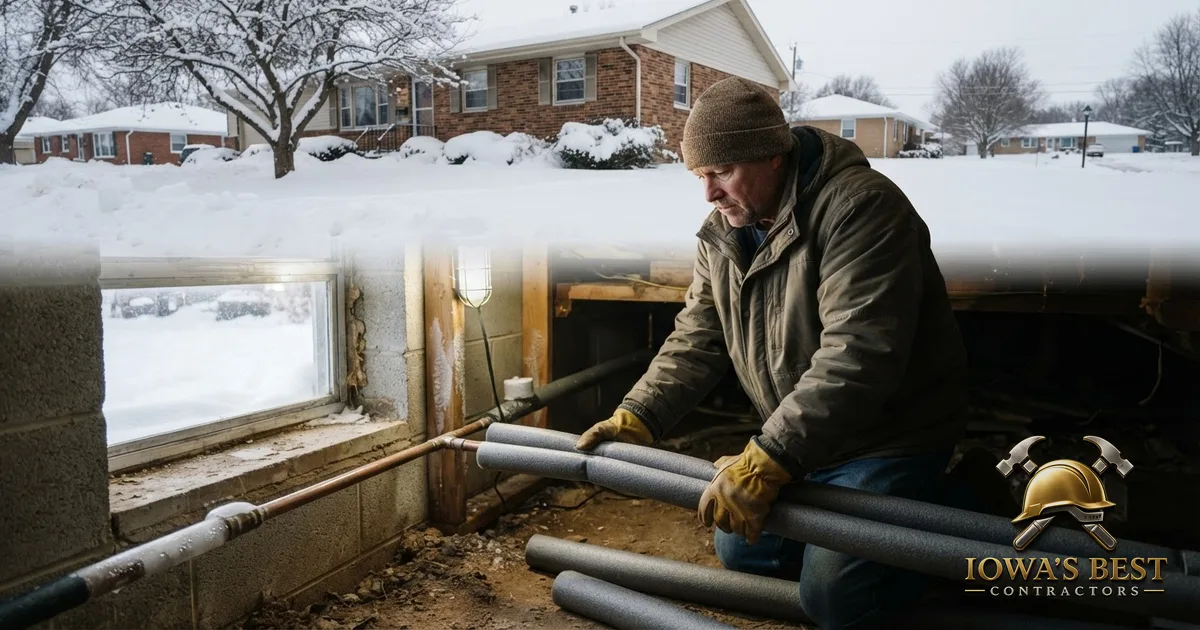
The best way to prevent frozen pipes in an Iowa winter is to keep vulnerable pipes warm and moving: insulate exposed lines, seal cold-air leaks, let a trickle of water run during hard freezes, and keep your home above 55 degrees even when you are away. A burst pipe can flood a home in minutes and cost thousands to repair, so a little prevention goes a long way. Here is a practical, Iowa-specific guide to keeping your pipes intact all winter.
Why do pipes freeze and burst in Iowa?
When water freezes it expands, and inside a closed pipe that expansion creates enormous pressure. Interestingly, the pipe usually does not burst where the ice forms. Instead, pressure builds between the ice blockage and a closed faucet until the pipe splits, often downstream of the frozen spot. That is why simply letting a faucet drip helps: it relieves pressure and keeps water moving.
Iowa winters are long and genuinely cold, with stretches well below zero and biting wind chills that pull heat out of walls and crawl spaces. Pipes in unheated or poorly insulated areas are most at risk, and a single overnight deep freeze is enough to cause a costly failure. Prevention is far cheaper than cleanup.
Which pipes are most at risk
Not all pipes freeze equally. The most vulnerable are those exposed to cold and far from your home's heat:
- Pipes in unheated spaces like basements, crawl spaces, attics, garages, and utility closets.
- Pipes along exterior walls, especially where insulation is thin or missing.
- Outdoor spigots and hose bibs, and the lines feeding them.
- Underground irrigation and sprinkler lines that were not blown out in fall.
- Kitchen and bathroom pipes on outside walls, particularly under sinks in cabinets.
Knowing your home's weak spots tells you where to focus. Walk your basement and crawl space on a cold day and feel for drafts and cold pipe runs.
Simple steps to prevent frozen pipes
Most freeze prevention is inexpensive and takes an afternoon. Focus on these:
- Insulate exposed pipes. Slip foam pipe sleeves over pipes in the basement, crawl space, garage, and attic. For high-risk runs, add heat tape rated for the job and follow the instructions carefully.
- Seal air leaks. Caulk and seal gaps where cold air reaches pipes, around rim joists, sill plates, and where lines enter the house.
- Disconnect garden hoses. Remove hoses, drain outdoor spigots, and shut off and drain the interior valve feeding frost-free hose bibs. Blow out sprinkler systems before the first hard freeze.
- Let faucets drip during deep freezes. A slow trickle from faucets served by vulnerable pipes relieves pressure and keeps water moving. Run both hot and cold on the coldest nights.
- Open cabinet doors. Under sinks on exterior walls, open the cabinet so household heat reaches the pipes.
- Keep the heat on. Never let the house drop below about 55 degrees, even when you travel. Keep the thermostat steady day and night during cold snaps.
- Keep the garage closed. If water lines run through the garage, keep the door shut to hold in warmth.
If you leave town in winter, do not shut the heat off to save money. Have someone check the house, or better yet, shut off the main water supply and drain the system so a failure while you are gone cannot flood your home.
What to do if a pipe freezes
If you turn on a faucet and only a trickle comes out during a cold snap, a pipe is likely frozen. Act quickly but carefully:
- Keep the faucet open. As you thaw the pipe, running water helps melt the ice and relieves pressure.
- Find the frozen section. Check the vulnerable spots first, usually along exterior walls or in unheated areas.
- Apply gentle heat. Use a hair dryer, a space heater kept away from flammables, or towels soaked in warm water. Work from the faucet side toward the blockage.
- Never use an open flame. A blowtorch or propane heater is a serious fire risk and can damage the pipe.
- Know where your main shutoff is. If a pipe has already burst, shut off the water immediately to limit flooding, then call a plumber.
If you cannot reach the frozen area, the pipe is inside a wall, or it has already split, it is time to call a professional.
When to call a plumber
Some situations call for a registered pro rather than DIY. Call a plumber if a pipe has burst, if you cannot locate or safely thaw the frozen section, if pipes freeze repeatedly, or if you want a pre-winter inspection to add insulation and heat tape in the right places. A plumber can also help reroute chronically vulnerable pipes and correct the cold-air leaks that cause repeat freezes.
You can compare local pros on our directory of Iowa plumbing, heating, and air conditioning contractors. Every business listed appears on the State of Iowa's official registration record under chapter 91C, and we never take payment for placement. In a metro like Sioux City you can narrow straight to Sioux City plumbing, heating, and air conditioning contractors. If freeze damage reveals insulation gaps, Iowa drywall and insulation contractors can help seal things up. Keep in mind that state registration is not a license or an endorsement; it simply confirms the contractor is properly registered to work in Iowa.
Frequently asked questions
At what temperature do pipes freeze?
Pipes are generally at risk once the temperature around them drops below about 20 degrees Fahrenheit, though exposed pipes in wind can freeze sooner. In Iowa, take extra precautions during any hard freeze, especially the first cold snap of the season before you are in a winter routine.
Should I leave faucets dripping all winter?
Not all winter, but yes during hard freezes, particularly overnight when temperatures plunge. A slow trickle from faucets served by vulnerable pipes relieves pressure and keeps water moving. The small water cost is far less than a burst-pipe repair.
How much does it cost to fix a burst pipe in Iowa?
A single burst-pipe repair often runs a few hundred dollars, but water damage to floors, walls, and belongings can push the total into the thousands. That gap is exactly why prevention and a fast shutoff matter so much.
Does homeowners insurance cover frozen pipes?
Many policies cover sudden pipe bursts and resulting water damage, but often not if the home was left unheated or you neglected reasonable precautions. Keeping the heat on and maintaining your plumbing helps both your pipes and any potential claim. Check your specific policy.
Ready to winter-proof your plumbing?
If you want a professional to inspect vulnerable pipes and seal up the weak spots before the next deep freeze, get quotes from registered local pros. You can collect bids from registered contractors in minutes, or browse registered plumbing, heating, and air conditioning contractors across Iowa. A little prevention now protects your home all winter long.